
Last updated November 22, 2026
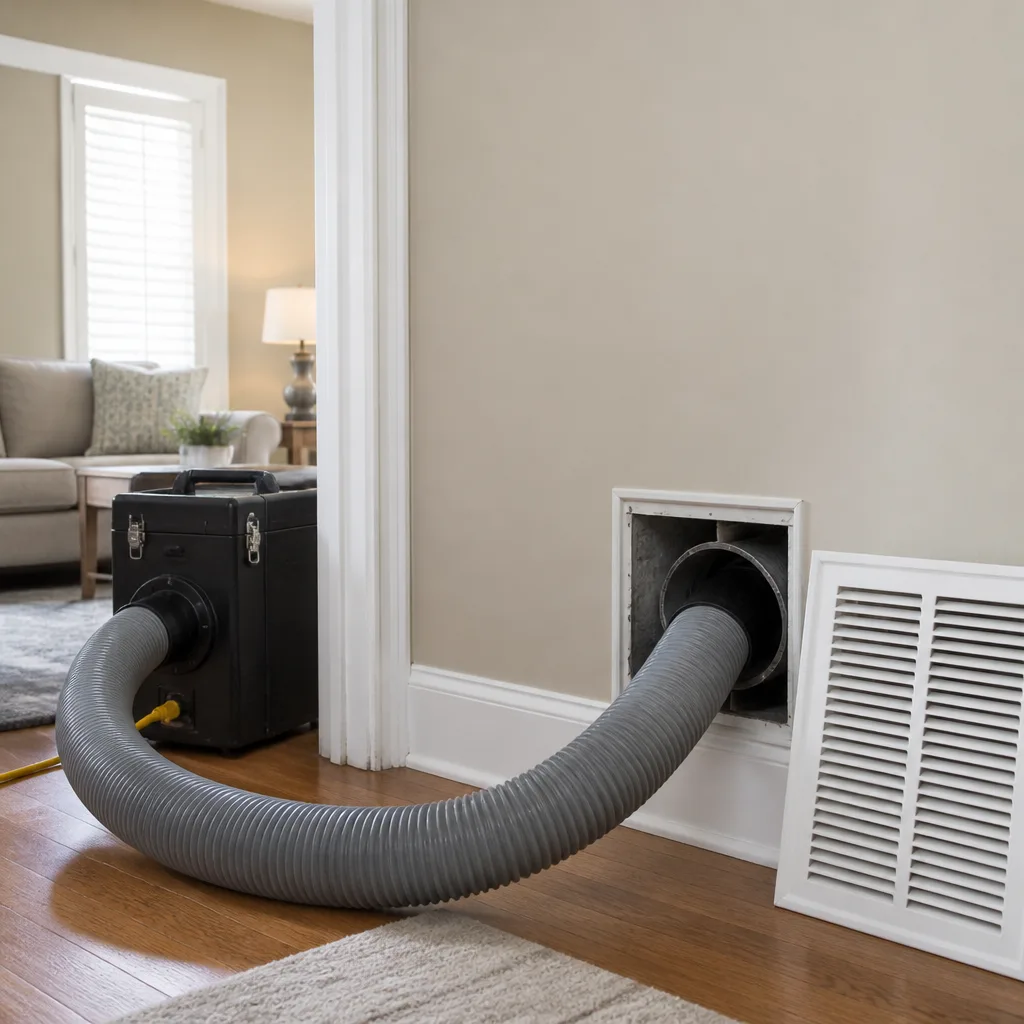 Whole-home duct cleaning
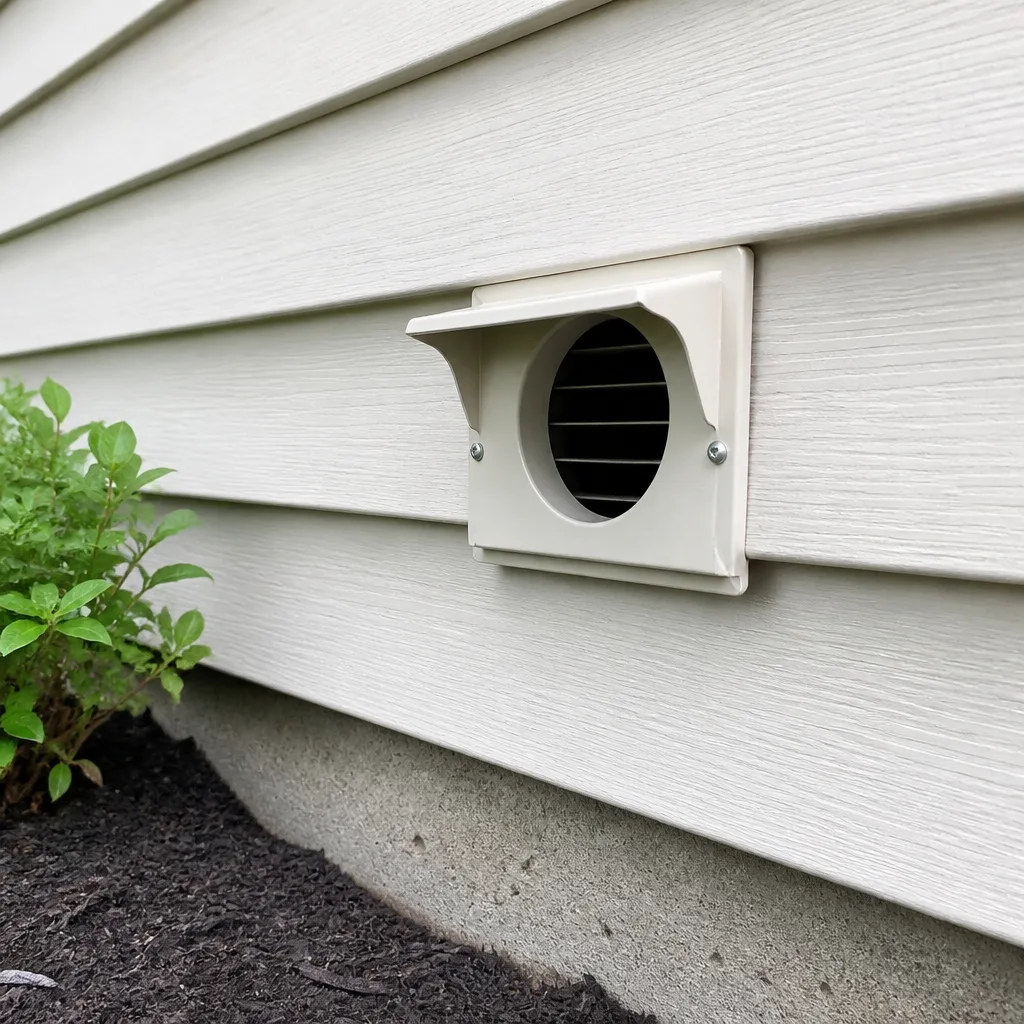 Dryer vent cleaning
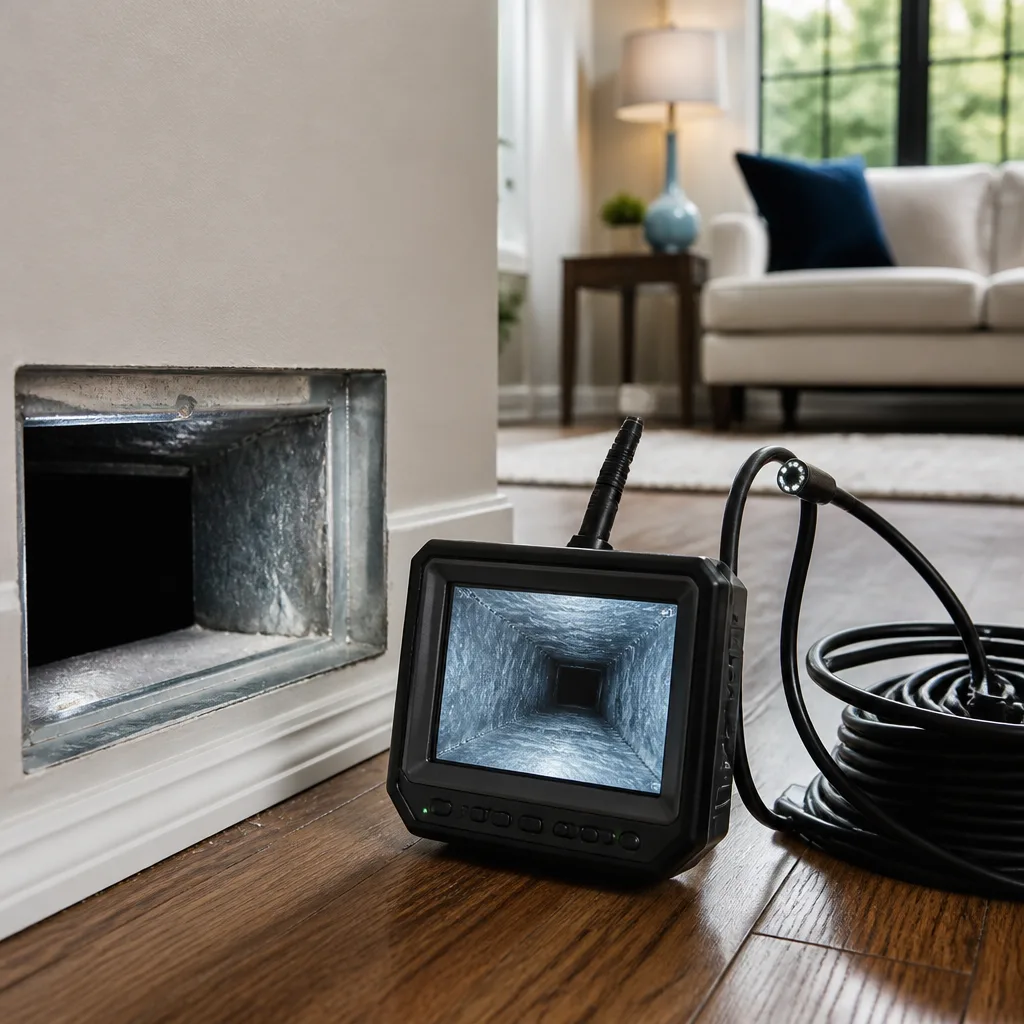 Camera inspection
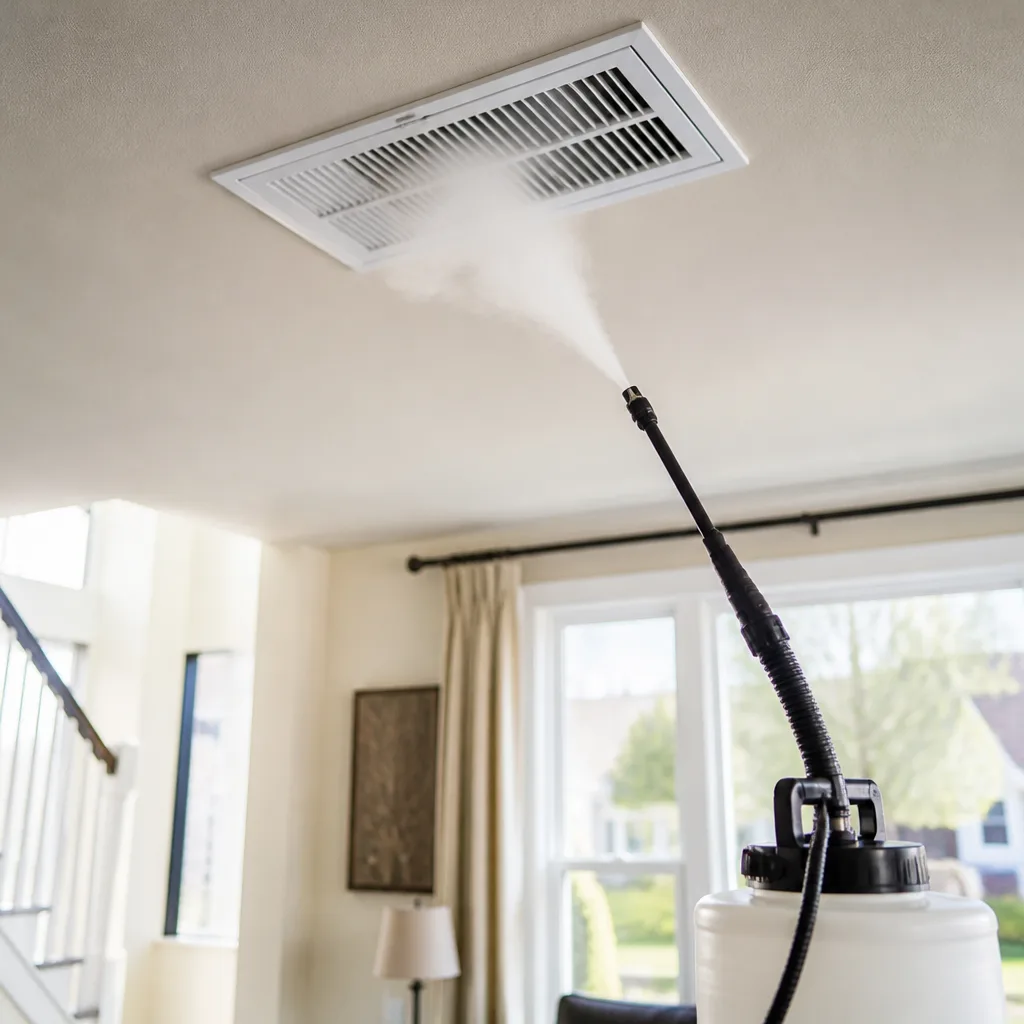 Sanitizing & deodorizing
Whole-system duct and dryer vent check with before-and-after photos - you see exactly what came out of your vents
That "$99 whole-house special" is a bait ad - the real number appears once they are in your hallway, or the "clean" is a shop-vac at the register. We photograph the inside of your ducts before and after instead.
Air Duct Cleaning Warning Signs: A Lower East Side Homeowner’s Reference Guide
A musty smell when the heat kicks on is not one problem. It could be mold on the evaporator coil, biological growth inside duct liner, a dead animal in a return chase, or condensation on a cold supply run. Each has a different fix and a very different cost. Most warning-sign articles hand you a vague checklist and leave it there. This guide does something more useful. It maps each symptom to a likely mechanical or biological cause, so when you call a contractor you can describe exactly what you’re seeing and smelling instead of saying “something’s off.” You’ll learn which signs can wait for a scheduled evaluation and which call for action now. Everything here is written for the buildings and the air that Lower East Side residents actually live with.
Quick Answer
The main warning signs that your ducts need attention are: a musty or mildew smell that returns after cleaning the vents, visible dark dust rings or streaks around supply registers, unexplained rises in heating and cooling costs, rooms that never reach the set temperature, filters that clog within weeks, and allergy symptoms that improve when you leave your apartment. Visible mold growth or white powder around ducts in a pre-1980 building are the two signs that should stop all do-it-yourself investigation and bring in a professional immediately.
Styles & brands we work with
- Whole-home duct cleaning
- Dryer vent cleaning
- Camera inspection
- Sanitizing & deodorizing
Table of Contents
- Smell Mapping: What Each Odor Tells You About Your Ducts
- What to Look For at the Registers
- When the Problem Is the Ducts, Not the Equipment
- Health Patterns That Point to the Air System
- Urgent vs. Scheduled: Two Lists You Need to Know
- Why Lower East Side Buildings Produce Specific Duct Problems
- What a Professional Checks That You Can’t
- Common Mistakes to Avoid
Smell Mapping: What Each Odor Tells You About Your Ducts
Smell is the most reliable first signal homeowners have, but only if you can name what you’re smelling and when it appears. The timing matters as much as the odor itself. An odor that shows up only when the heat runs points to a different cause than one that hangs in the air all day. Here’s how we walk through odor complaints with Lower East Side customers.
Musty or mildew smell
A musty odor that gets stronger when the system runs usually means biological growth. That growth lives where moisture collects: on a wet evaporator coil, inside duct liner that has stayed damp, or in a supply run where condensation forms on a cold surface. It is not mold in the air itself. It’s mold growing on a surface the air passes over, and the smell is a byproduct of that growth being carried into your rooms. Removing the smell means finding and drying the water source, not just misting something into the vents.
Burning dust smell
That hot, dusty smell the first time the heat comes on each fall is usually residue burning off the heat exchanger and ductwork after months of sitting idle. It tends to fade within a few cycles. But a burning smell that persists, or one that has any electrical tang to it, is a different matter. Stop using the system and get it checked. Duct debris can collect near a heat source, and we treat a persistent burning smell as a safety call, not a cleaning call.
Chemical smell
A sharp chemical odor can come from off-gassing insulation, adhesives, or residue from a previous pest treatment that settled into the ductwork. In older Lower East Side buildings, the source is often materials that were installed decades ago and have only recently started to break down. This smell needs a professional assessment because the source determines whether cleaning, sealing, or replacement is the right response.
Dead animal odor
A persistent, sickly smell that doesn’t fade with cleaning often comes from a return chase or a duct cavity that a rodent or bird got into. The fix is physical removal and disinfection of the affected section, not an air freshener and not a basic vacuum pass.
What to Look For at the Registers
Supply registers are the part of your duct system you can actually see, and they tell you a lot. Look up close with a flashlight. The pattern of what’s around the vent grille is often the first hard visual evidence of a problem.
Black dust rings or streaks
Dark rings around a register, or streaks coming out from the edge of the grille, are the classic sign of filtration bypass. Air is leaking around the filter instead of passing through it, so unfiltered air and the dust it carries get pushed against the wall and ceiling around the vent. It looks like dirt, and it is dirt plus whatever else the filter should have caught. In Lower East Side apartments where the filter box is poorly sized or the grille is loose, this is a common finding. It’s a fixable mechanical issue as much as a cleaning issue, and sealing the gaps is part of the job.
White powder or chalky residue
Here is the one we treat with the most caution. A white, chalky, or fibrous powder around vents in a pre-1980 Lower East Side building could come from duct insulation or duct board that contains asbestos. Buildings from that era were often built or renovated with materials we would not use now. Do not wipe it, vacuum it, or poke at it. Disturbing it is the exact risk you want to avoid. The material needs sampling and testing by a qualified lab before any cleaning begins. No reputable cleaner should touch a duct system with suspected asbestos-containing material until the test comes back. This is the warning sign that should stop all do-it-yourself investigation.
Visible mold growth
Dark spots, fuzzy patches, or staining on visible duct interiors near the registers means moisture has been sitting long enough to grow mold. Where you can see it, there is more where you can’t. Visible mold is the second stop sign for do-it-yourself work. We treat it as a job for someone who can find the water source, correct it, and clean and sanitize the system with the right equipment.
Loose or disconnected ducts
If a register barely blows, or you can see a gap at a duct joint, you’re losing conditioned air into the wall or floor cavity before it ever reaches the room. In older Lower East Side multi-family buildings, taped or friction-fit joints fail over time. Duct repair and sealing is part of the air system work, not a separate contractor’s job.
When the Problem Is the Ducts, Not the Equipment
Homeowners often blame the furnace or the AC unit when the real culprit is the pathway the air travels through. Before you spend money on equipment repair, check whether the symptoms point to a duct problem. These are the four we hear most often in Lower East Side apartments.
- Uneven room temperatures. One bedroom is cold while the living room is fine. The equipment is producing enough air, but the distribution is off. Leaks, crushed flex duct, or blocked runs are the usual causes, and they show up more in renovations where ducts were routed around new walls.
- Rising energy bills with no change in use. Leaky ducts dump conditioned air into attics, chases, and wall cavities. The system runs longer to make up the loss. A jump on your bill with the same routine is worth investigating at the duct level before you replace anything mechanical.
- Filters clogging within weeks. A filter loading up fast means a lot of particulate is reaching it, which points to buildup in the ducts and returns. If you’re changing filters every few weeks, the air system is carrying more dust than it should.
- Weak airflow at distant registers. Registers at the end of a long run feel weak compared to the ones near the unit. That pattern suggests leakage or a restriction along the way.
How a professional separates one cause from another
We use contact cleaning systems like Rotobrush rotary tools to dislodge contaminants bonded to duct walls, and HEPA-rated vacuum equipment to capture what comes loose at the source rather than pushing it back into your rooms. That combination lets us see the inside of the system and confirm whether the problem is buildup, a leak, or both. For a deeper look at what air duct cleaning actually involves, we walk through the equipment and the process on that page.
Health Patterns That Point to the Air System
We’re not doctors, and we can’t diagnose anything. But there is a pattern homeowners report that points clearly at the air system, and it’s worth taking seriously as a diagnostic clue rather than a health claim.
The pattern is this: symptoms that improve when residents leave the apartment and return when they come home. Allergies that get worse in one room but not others. A cough or congestion that shows up during heating season and eases in the summer. When several people in the same apartment notice the same reactions in the same room, the room itself is worth investigating. Airborne particulate and microbial growth in a duct system can be part of that picture, and the building you live in shapes how much of it stays in the air.
Lower East Side homes present a few conditions that make this worse than in newer construction. Dense multi-family buildings share return chases and wall cavities, so what’s in one unit’s air path can migrate. Smaller apartments turn the air over more frequently than a suburban home, which means any contamination in the system cycles into your living space more often. And many buildings have had decades of partial renovations, so ventwork added at different times may not connect cleanly. None of that means every apartment has a problem. But when symptoms line up with time spent in a particular room, it’s worth having the system inspected before assuming it’s seasonal allergies.
A short list to check before you call
- Does the smell or symptom show up only when the system runs?
- Is it one room or the whole apartment?
- Has it gotten better when residents are away for several days?
- Any new staining, white powder, or dark spots at the registers?
- Have filters been clogging faster than usual?
If two or three of those line up, that’s enough to schedule an evaluation. Write it down, because a good technician can use a plain description of timing and location to narrow the cause fast.
Urgent vs. Scheduled: Two Lists You Need to Know
Not every warning sign is an emergency, and treating them all like one creates panic; treating them all like routine delays the fix. Here’s how we sort the signs, based on what’s actually at stake. Use this as your reference when deciding whether to call now or plan for a visit.
Signs that require an immediate call
- Visible mold growth on or around duct surfaces, especially where you can see it spreading.
- White powder or fibrous material around vents in a pre-1980 Lower East Side building, until it’s tested. Stop, don’t disturb it, and get a professional in.
- A persistent burning smell, especially any smell with an electrical edge.
- Dead animal odor that isn’t clearing, pointing to a crawlspace or return chase problem.
- Heavy dust or debris blowing out of registers right after system work or a renovation nearby.
Signs that call for a scheduled evaluation
- Occasional musty smell that fades and returns.
- Dark rings around registers with otherwise normal airflow.
- Uneven room temperatures.
- Rising energy bills.
- Frequent filter clogging.
- Allergy patterns that point at one room.
The distinction matters because it changes the job. Immediate signs usually mean there’s a source that has to be identified and corrected before cleaning, sometimes a leak, sometimes a material hazard, sometimes a pest problem. Scheduled signs can be investigated in one visit along with a full system check. A well-run company will tell you which category your situation falls into when you call. If they don’t ask, that’s a sign in itself.
Why Lower East Side Buildings Produce Specific Duct Problems
The air system in a Lower East Side apartment is shaped by the building it lives in. Tenement-era construction, walk-up layouts, and decades of renovation have left a lot of homes with ductwork that was added, extended, or rerouted piece by piece. Understanding that history explains a lot of the signs above.
One recurring reality is that duct runs in these buildings are often short, tight, and routed through wall cavities and shared chases rather than dedicated duct shafts. That means leaks have somewhere to go and, more to the point, air from one part of the building has an easier path to another. Another is that many apartments have had their heating systems converted or replaced at some point, and the ductwork sometimes didn’t come with them. The result is a mismatch between what the system can move and what the duct pathway can carry. That mismatch shows up as the symptoms above: weak registers, uneven rooms, faster-clogging filters.
The age of building materials is the other factor. Pre-1980 buildings in Lower East Side are exactly the buildings where we approach any white or fibrous duct residue carefully, for the asbestos reason already covered. That is not a reason to avoid the work. It’s a reason to do it in the right order: test first, clean second.
What this means for your decision
When you’re comparing estimates, ask how the company handles old duct materials and how they seal leaks rather than just cleaning. A cleaning-only company will vacuum the ducts and leave the gaps, which means the same signs come back. The full air system approach closes the gaps, treats the air, and hands back a system that works. That’s the difference between a maintenance visit and a fix.
What a Professional Checks That You Can’t
Some of the most important warning signs are invisible from a register. Here’s what we actually look at during an inspection, and why it changes the recommendation.
- The condition of the duct interior, not just the vent. Contact cleaning systems reach surfaces that a shop vac or a hand-in-the-vent inspection never sees. Rotobrush rotary tools dislodge contaminants bonded to duct walls. If the buildup is only at the register, cleaning is straightforward. If it’s throughout the run, the job is bigger.
- The air handler and coil. A wet evaporator coil or a dirty air handler causes the musty smell and the allergen symptoms more often than the ductwork does. Cleaning only the ducts and ignoring the coil leaves the problem in place.
- Every joint and connection. We look for gaps, failed tape, and disconnections. This is where duct repair and sealing comes in. Sealing the leaks changes the pressure in the system and improves airflow to the far registers.
- The filter setup. Is the filter the right size, seated properly, and protected against bypass? Filtration bypass explains many of the black rings you see.
- The drying pathway. If there’s moisture in the system, we find where it comes from before cleaning and sanitizing. We use Guardsman and Aprilaire-grade solutions for sanitizing and microbial control, and Abatement Technologies air-scrubbing equipment on the job, and the fix only holds if the water source is corrected first.
- System compatibility. If your home runs Honeywell or Aprilaire components, we confirm the cleaning and any repair work integrates with those parts rather than working around them.
Why in-house scope matters
A connected air system is one system: supply ducts, the air handler, the returns, the dryer vent, and the air treatment all touch each other. A company that cleans but doesn’t repair and seal, and doesn’t treat air quality, points you elsewhere the moment the job gets past vacuuming. We do all of it under one roof, which means one assessment and one set of photos of what’s actually true about your ducts. The full air system, cleaned, sealed, and sanitized, is the standard we hold the work to. For HVAC cleaning specifically, the HVAC cleaning page covers the coil and air handler side of that work.
Common Mistakes to Avoid
- Treating a musty smell with air fresheners or scented filters. It masks the odor and leaves the biological growth in place. The musty smell will come back, and in a Lower East Side apartment with a wet coil behind it, masking is the only thing that keeps changing.
- Vacuuming or wiping white powder around vents before testing. In a pre-1980 Lower East Side building, that powder may contain asbestos. Disturbing it is the risk, not the fix. Get it tested first.
- Assuming every problem is the furnace or AC. Uneven rooms, weak registers, and rising bills often trace back to duct leaks. Replace a machine that wasn’t the problem and the signs stay.
- Buying the cheapest quote and expecting it to cover the full system. Low headline prices are often for one pass of the vents only. The gaps, the coil, and the sanitizing are not included, and the signs come right back.
- Cleaning without repairing. Vacuuming a leaky duct system cleans the air pathway and leaves the loss in place. Sealing is what makes the cleaning hold.
- Ignoring the dryer vent. A clogged dryer vent is a separate item from the ducts but part of the same air pathway. It’s a fire risk. If your dryer takes two cycles to dry clothing or the vent itself is warm to the touch, that needs a look on its own. dryer vent cleaning handles it.
See the difference
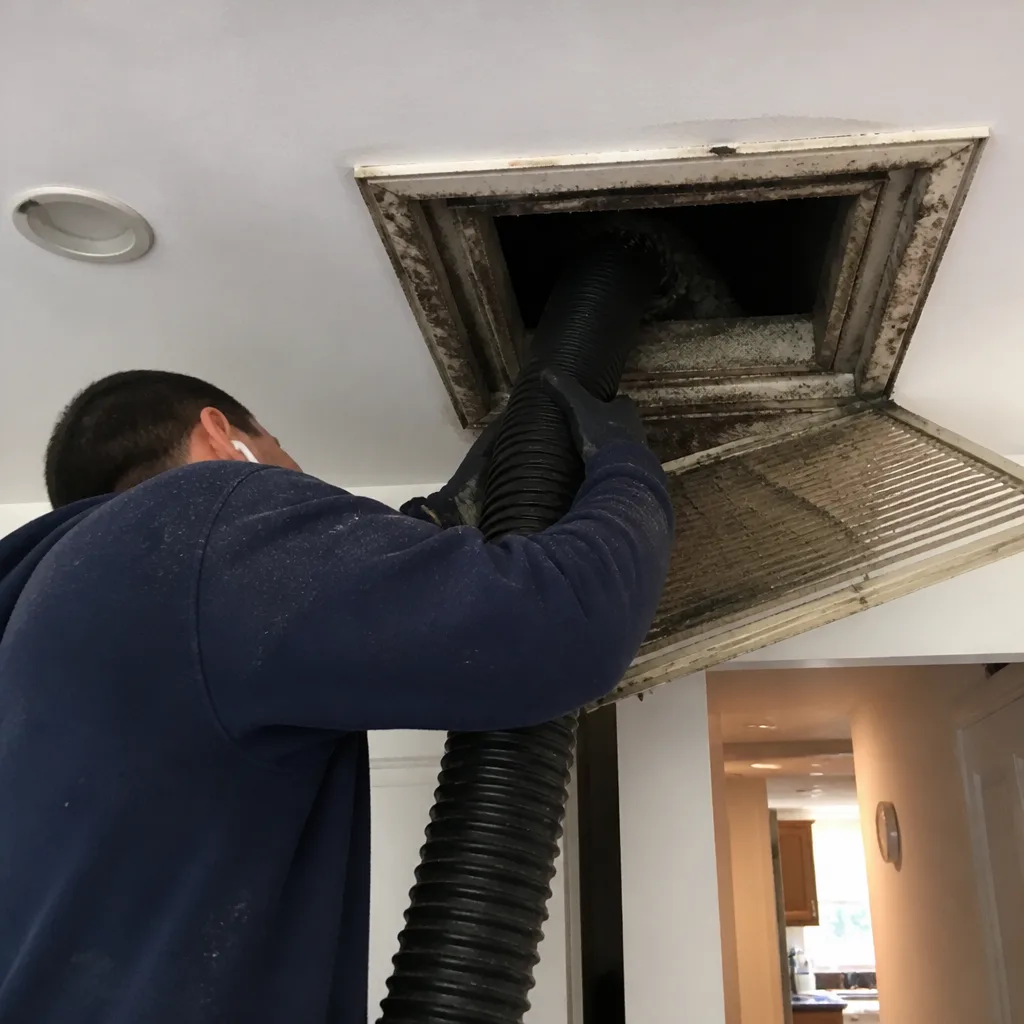 Before
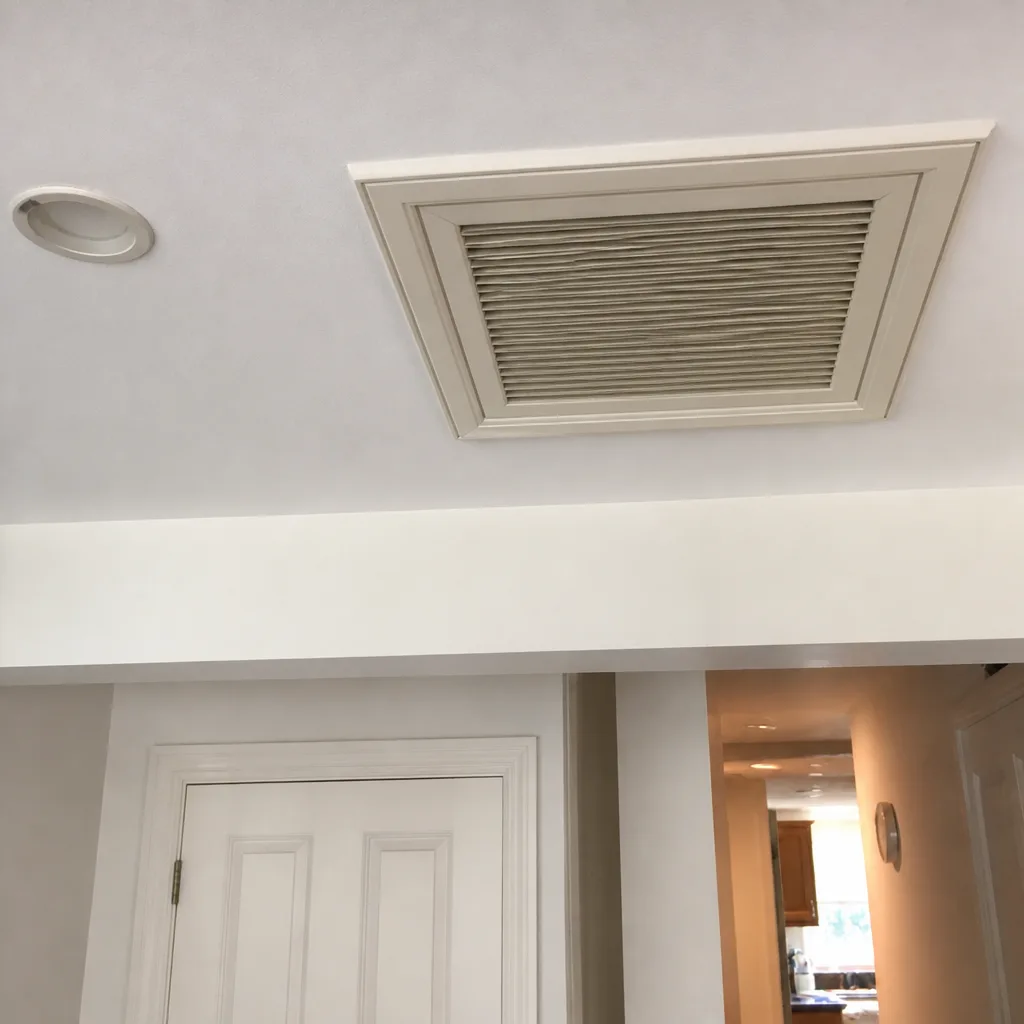 After
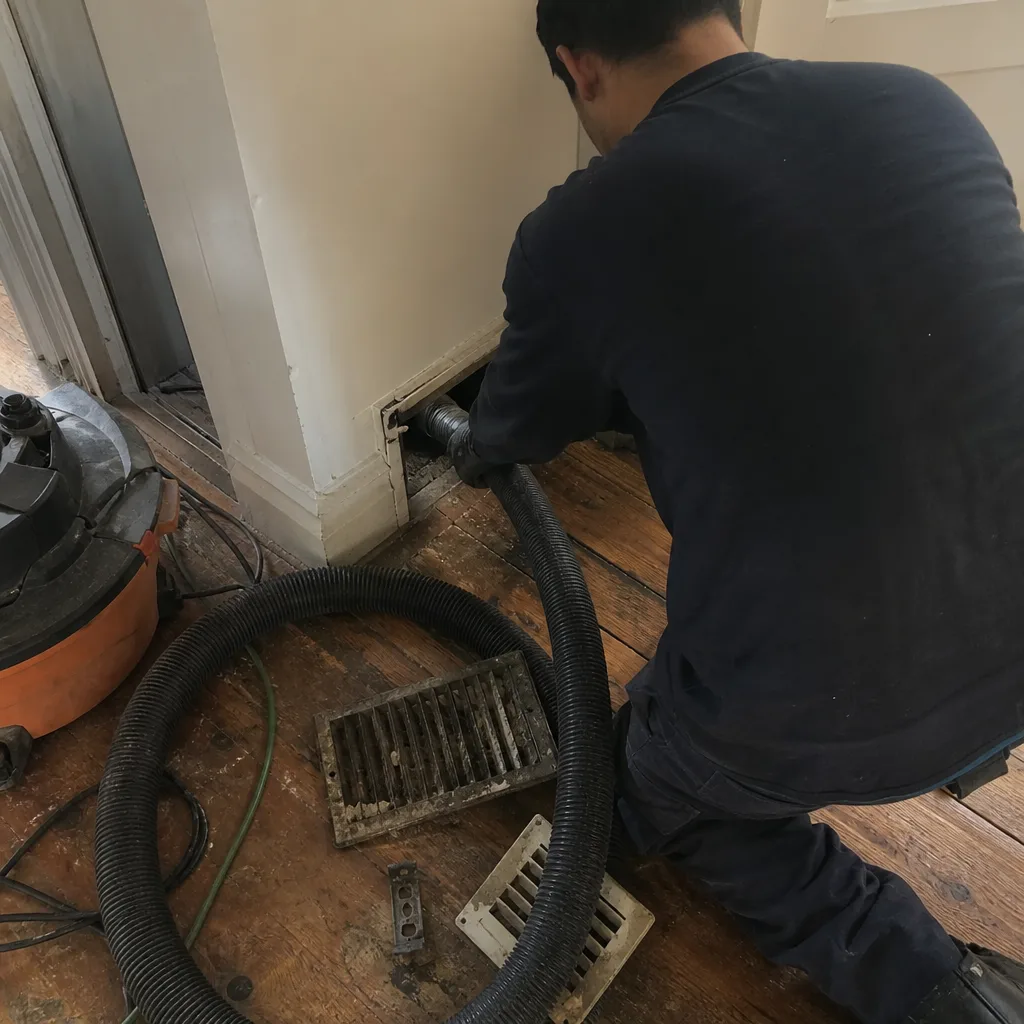 Before
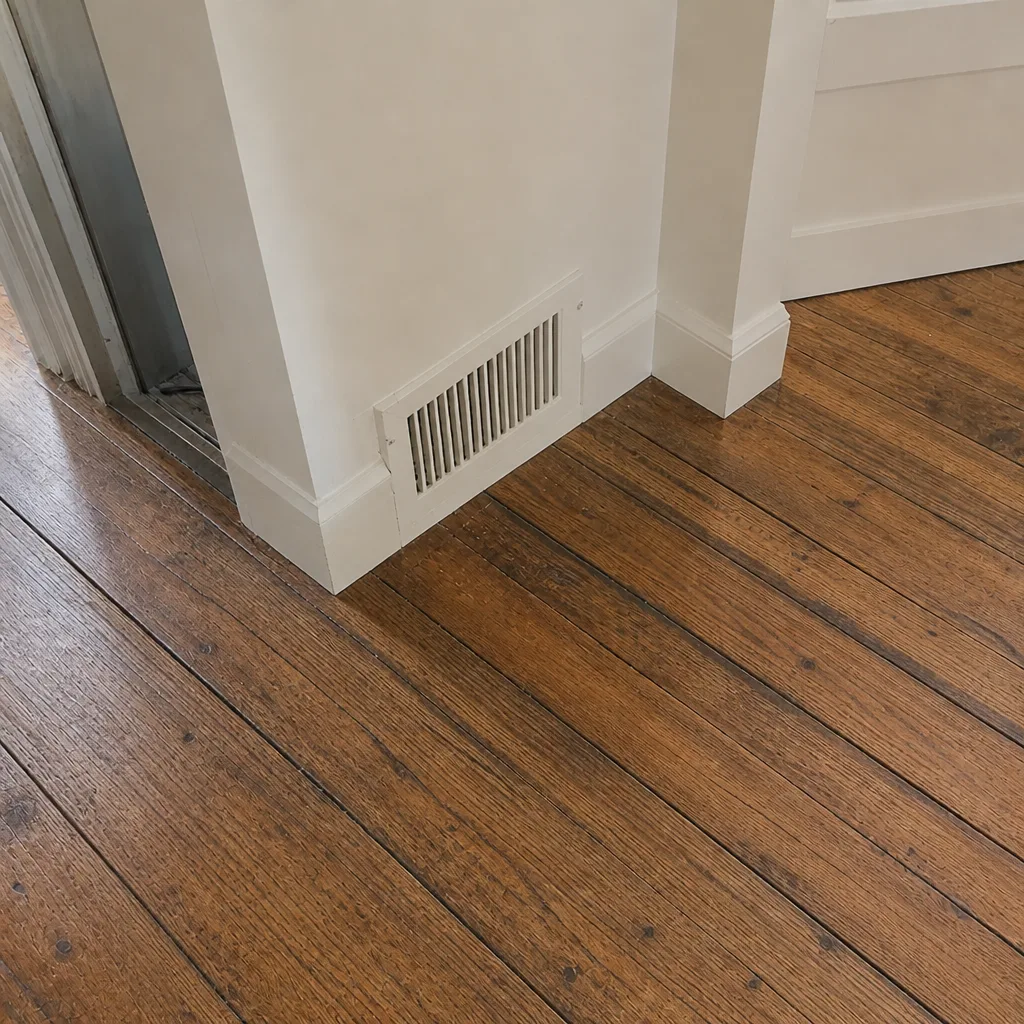 After
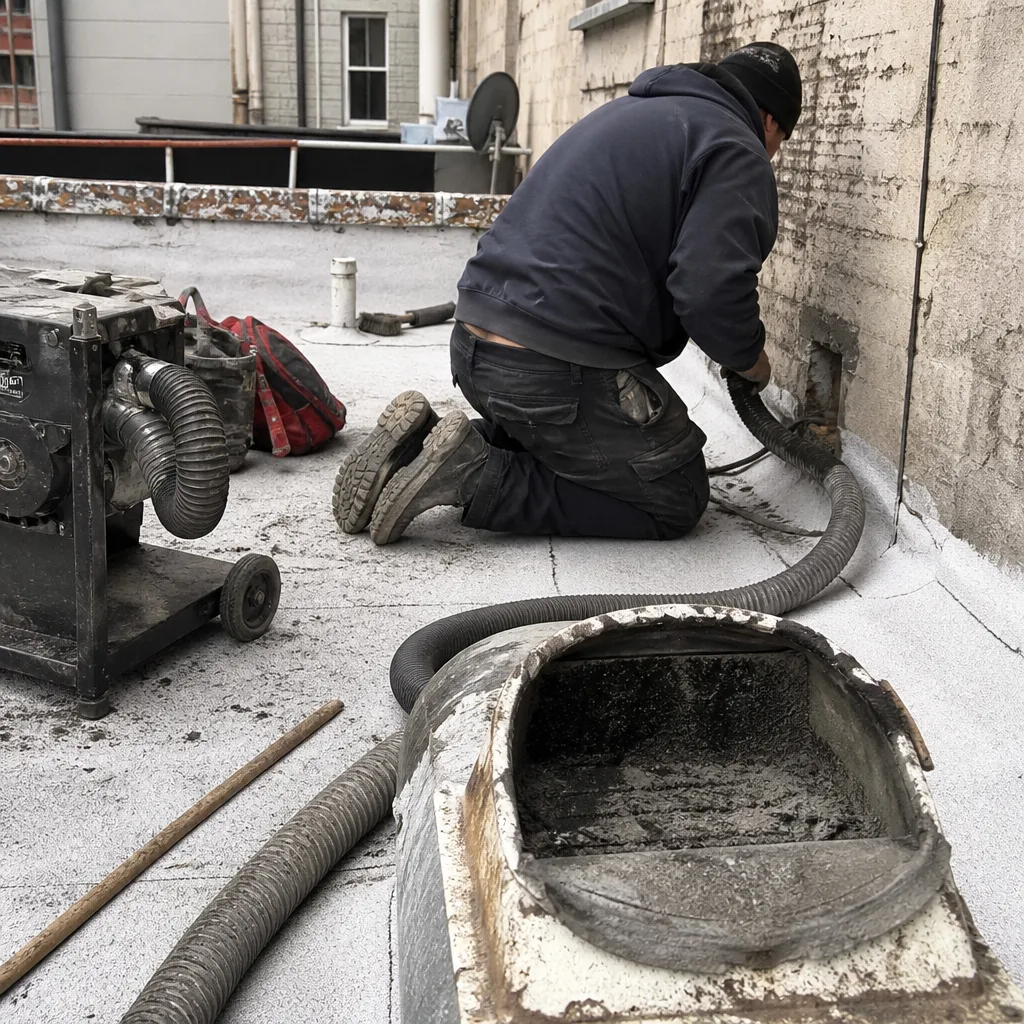 Before
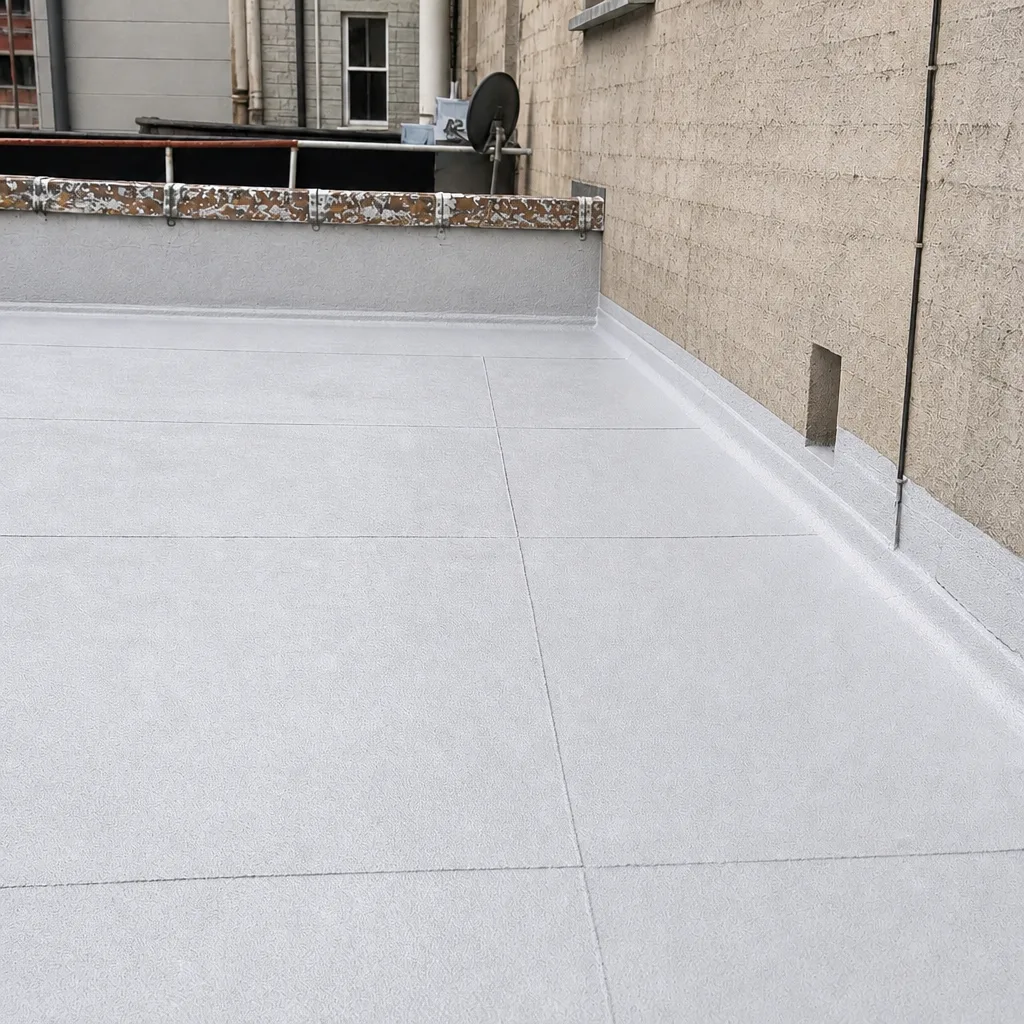 After
When to Call a Professional
Call when you see visible mold, when you find white powder or fibrous residue in an older building, when a burning or chemical smell won’t clear, or when a musty smell returns after cleaning the vents yourself. Call when filters clog within weeks, when one room runs consistently hot or cold, or when allergy symptoms line up with time spent at home. And call when you’ve heard a dead-animal odor you can’t trace. In each of those cases, a professional inspection separates a simple cleaning job from a repair, a water-source fix, or a hazard that has to be handled first. Our technicians have up to 11 years of experience reading exactly these signals. Air Duct Cleaning Lower East Side offers free estimates in Lower East Side. Call (866) 369-3604. We answer 24/7. Fast dispatch from 7am to 7pm, Sunday through Friday.
Frequently Asked Questions
The most reliable signs are a musty smell that returns after cleaning the vents, dark dust rings around registers, filters that clog within weeks, uneven room temperatures, and allergy symptoms that improve when you leave your apartment. Visible mold or white powder in a pre-1980 building is the most urgent combination, and those should stop any do-it-yourself work. Call (866) 369-3604 for an exact quote. Estimates are free.
Pricing is set per job by a written estimate after we assess your system, because apartment layouts, duct runs, and access points vary a lot in Lower East Side. We don’t quote per vent, and we don’t run teaser prices that grow once a technician is on site. The written estimate sets the final price, and it’s free to get one. Call (866) 369-3604 for an exact quote.
Low quotes usually cover one quick pass of the visible vents with consumer-grade tools, without cleaning the coil, sealing the leaks, or sanitizing the system. The signs you noticed come back because the cause wasn’t addressed. One flat price per system agreed before work starts, with before-and-after photos of your own ducts, is the way to compare fairly. Call (866) 369-3604 for an exact quote. Estimates are free.
Ask for before-and-after photos of your own ducts, not sample photos from other jobs. Any company doing real work can show you what they found and what was removed. That transparency is part of why we photograph every job, and it changes how a company operates when it knows a homeowner will see the inside of the system either way. Call (866) 369-3604 for an exact quote.
There’s no fixed schedule that fits every home. Clean when the signs show up, not on a calendar the company sets for you. In Lower East Side buildings, that often means a first full assessment, then a check if the musty smell, filter clogging, or uneven temperatures return. A home with pets, smokers, allergies, or ongoing renovation tends to need it sooner. Call (866) 369-3604 for an exact quote. Estimates are free.
In a pre-1980 Lower East Side building, yes, it could. Some duct insulation and duct board from that era contained asbestos. Do not wipe, vacuum, or disturb it. Have it sampled and tested by a qualified lab before any cleaning is scheduled. We won’t clean a system with suspected asbestos-containing material until the test comes back, because disturbing the material is the risk, not the residue itself. Call (866) 369-3604 and we’ll explain the testing path.
The Bottom Line
Warning signs are clues, not verdicts. A musty smell, a dark ring around a register, and a clogging filter each point at a specific cause, and the cause determines whether you need cleaning, sealing, a water-source fix, or testing before anyone touches the system. The two signs that should stop you cold are visible mold and white powder in a pre-1980 building. Everything else can be evaluated in one visit. The right team for that visit is one that cleans, repairs and seals, and treats air quality as part of the same air system. We do all of that on one job, with professional-grade equipment and before-and-after photos of your ducts. For more on the core work, see Air Duct Cleaning Lower East Side. Call (866) 369-3604 for a free estimate. We answer 24/7. Fast dispatch from 7am to 7pm, Sunday through Friday.
Written by the team at Air Duct Cleaning Lower East Side.