
Last updated November 22, 2026
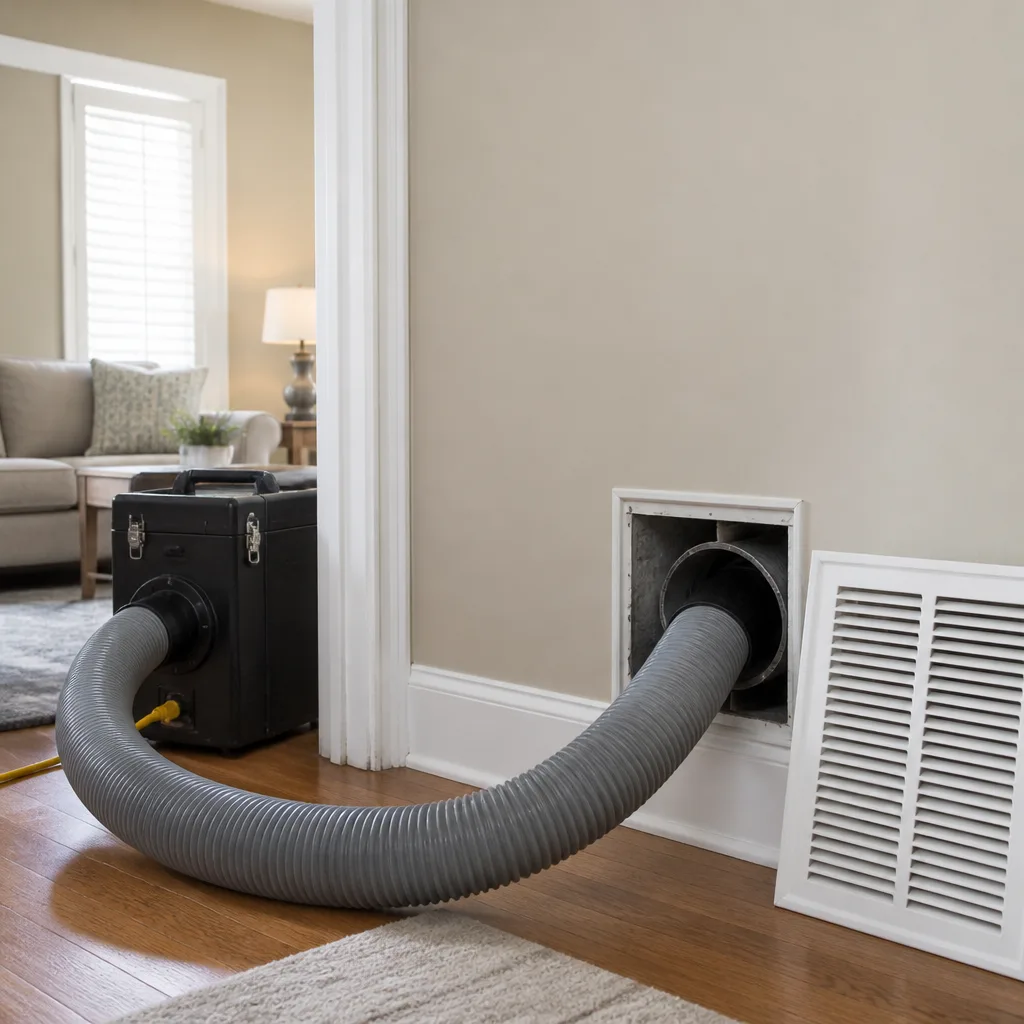 Whole-home duct cleaning
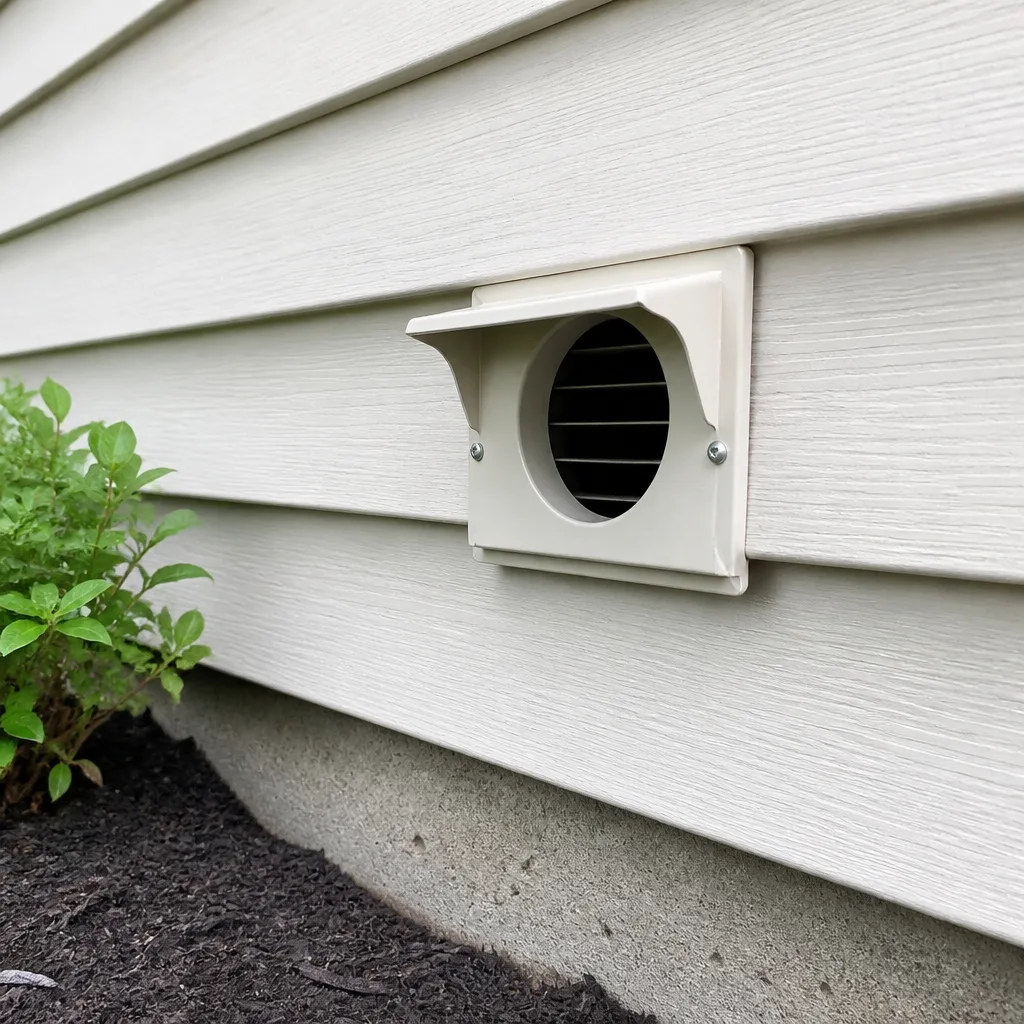 Dryer vent cleaning
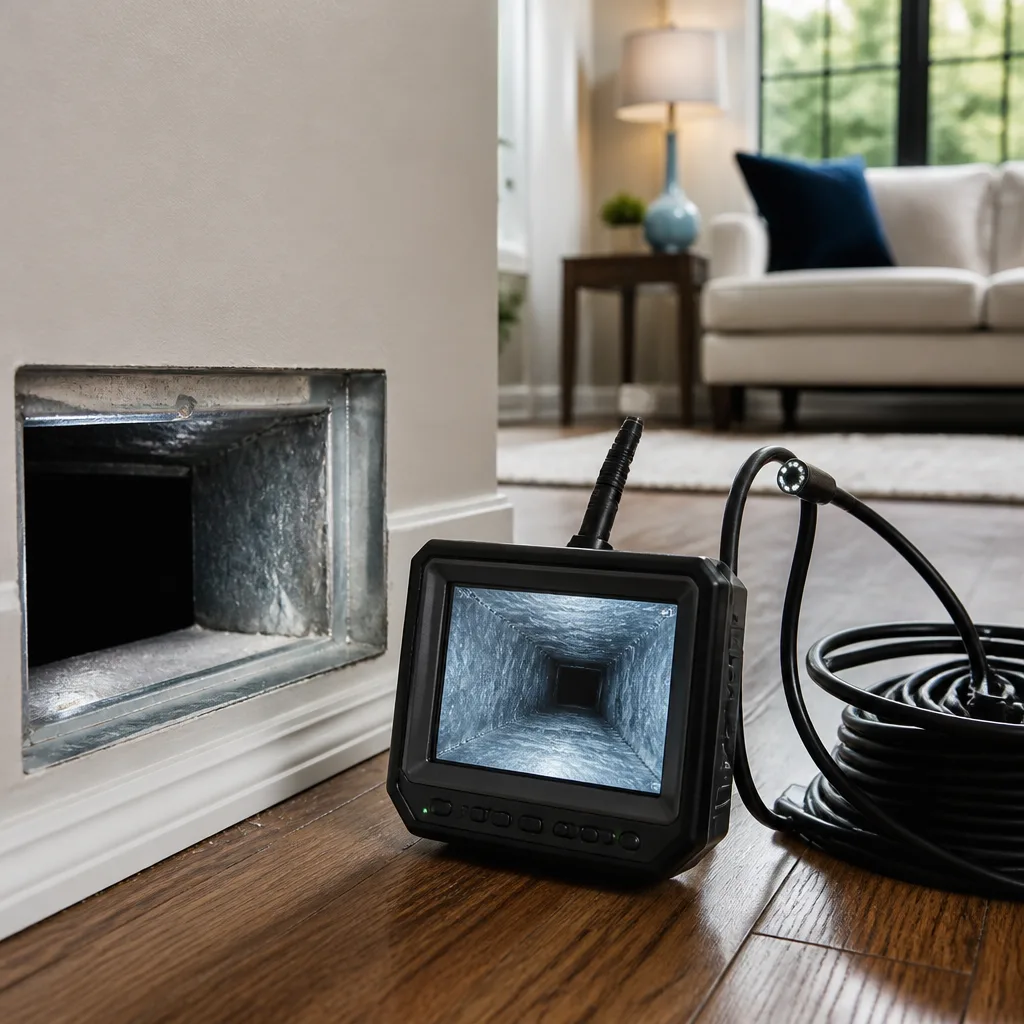 Camera inspection
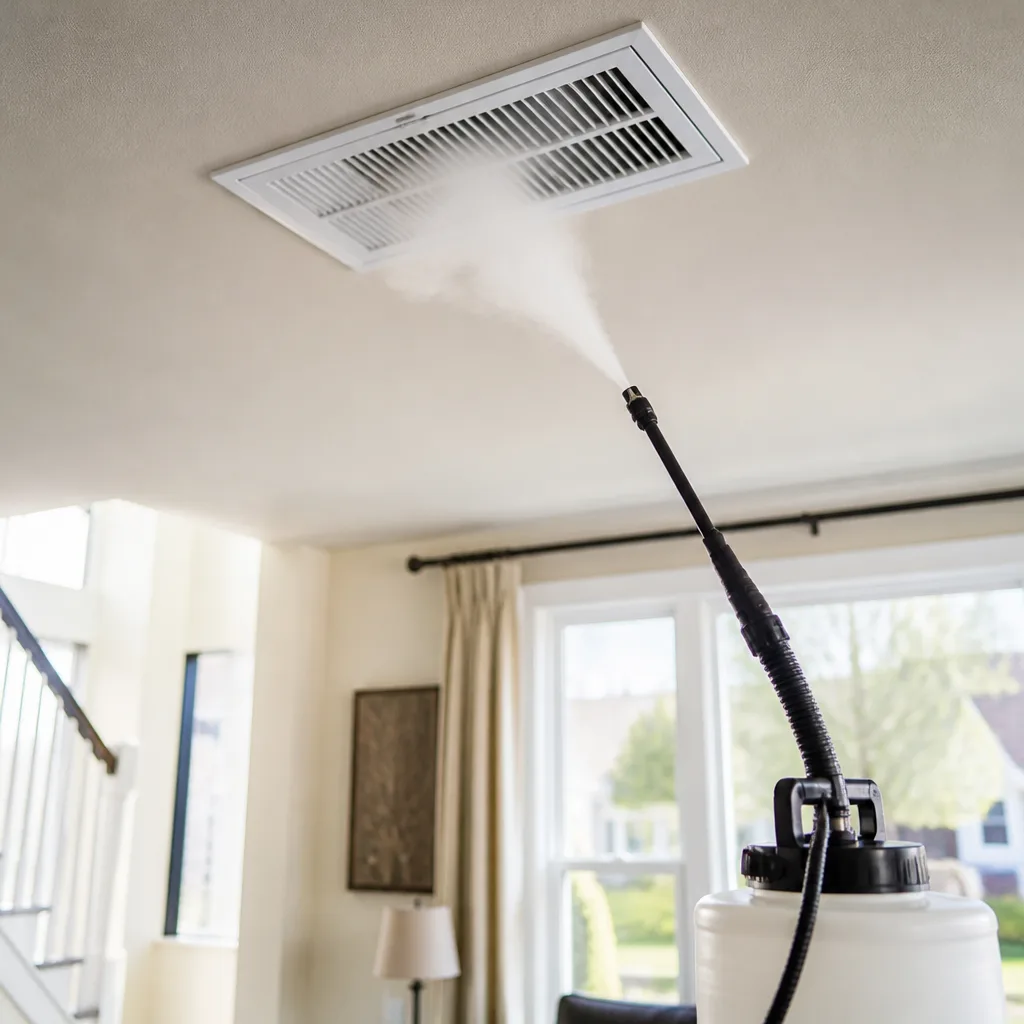 Sanitizing & deodorizing
Whole-system duct and dryer vent check with before-and-after photos - you see exactly what came out of your vents
That "$99 whole-house special" is a bait ad - the real number appears once they are in your hallway, or the "clean" is a shop-vac at the register. We photograph the inside of your ducts before and after instead.
How to Hire an Air Duct Cleaning Contractor in Lower East Side: A Step-by-Step Guide
Most people hire a duct cleaner the way they hire a locksmith: they find the first name on a coupon, hope for the best, and move on. That approach falls apart in a Lower East Side apartment, where your ducts sit inside a shared building with shared returns, aging risers, and neighbors whose cooking smells travel through the same channels as your air. The contractor you invite in isn’t just cleaning a vent – they’re working inside a system that connects you to the whole floor. This guide gives you the vetting process we’d use ourselves: equipment questions that expose a low-bid operator, licensing checks worth doing before anyone steps inside, and the contract terms that protect you when the job is done.
Quick Answer
Hire an air duct cleaning contractor in Lower East Side by verifying New York State and NYC licensing, confirming the equipment meets professional CFM and negative-pressure standards, and getting scope, documentation, and a warranty in writing before work starts. Ask about CFM, HEPA filtration, and whether they seal leaks in-house – not just vacuum. A legitimate contractor welcomes those questions; a coupon-mailer operator will dodge them.
Styles & brands we work with
- Whole-home duct cleaning
- Dryer vent cleaning
- Camera inspection
- Sanitizing & deodorizing
Table of Contents
- Why the Cheapest Quote Is Usually the Most Expensive
- The Equipment Questions That Expose a Low-Bid Operator
- Licensing and Insurance: What to Verify Before Anyone Enters Your Home
- NADCA Membership vs. Certification: What the Difference Actually Means
- Six Diagnostic Questions to Ask on the Quote Call
- Why Building Type Changes the Job in Lower East Side
- What Has to Be in the Contract, in Writing
- Common Mistakes to Avoid
Why the Cheapest Quote Is Usually the Most Expensive
If a contractor quotes you a whole-apartment duct cleaning for under $200, they are almost certainly using a portable unit with insufficient CFM to create negative pressure – meaning they are pushing debris around, not extracting it. That’s the plain truth of it. A shop vacuum or entry-level portable wand can pull a few ounces of dust from the vent face, but it can’t pull the bonded debris off the interior duct wall, and it can’t hold the system under negative pressure long enough to keep dislodged particles from drifting back into your rooms.
What you actually get from a low-bid job is a punch list of add-ons presented after the technician is already inside – a “sanitizing fog,” a “deodorizer,” an “anti-microbial mist” – any of which sounds like a big deal until you realize it’s a fogger and a bottle of enzyme solution. In Lower East Side buildings, where units share plenum space and return air, the cost of doing it wrong isn’t a wasted $200. It’s dust redistributed into the very rooms you were trying to clean.
The right question isn’t “how cheap?” It’s “what equipment, and how do they verify the work?” Read this guide in order and you’ll know how to tell the difference before anyone knocks on your door. Our team spends a lot of time walking Lower East Side homeowners through exactly this – which is why we wrote it down.
The Equipment Questions That Expose a Low-Bid Operator
Professional duct cleaning depends on two physical realities: enough airflow to dislodge bonded contaminants, and enough vacuum to capture them at the source. Both come down to equipment specs you can ask about directly. You don’t need to be an HVAC engineer to spot a bluff, but you do need a few numbers and a few brand names in your back pocket.
Airflow (CFM). The cleaning head needs enough CFM (cubic feet per minute) of air moving through the branch to agitate and lift dirt from the duct wall. Portable units many low-bid operators use often sit in the 400-700 CFM range. Professional truck- or trailer-mounted or high-volume systems push several thousand CFM. Ask the contractor what CFM their cleaning head produces and what their vacuum pulls. A confident answer comes in under thirty seconds. A dodge – “oh, plenty,” “we use the best” – is your cue to move on.
Negative pressure. The work area should be held under negative pressure so loosened debris gets pulled toward the vacuum, not released into the room. That requires a vacuum capable of continuous high-volume capture, not a burst of suction from a handheld unit. Ask: “How do you maintain negative pressure during the job?” A legitimate answer describes the vacuum and the containment approach; a dodge describes “advanced technology” with no specifics.
HEPA capture. Not all vacuums are created equal. HEPA-rated equipment traps fine particulates at the source. In our experience, Nikro HEPA vacuum units are the standard for this. If a contractor can’t tell you whether their vacuum is HEPA-rated, that tells you something.
Rotary contact cleaning. Ask whether they use rotary brush or contact cleaning inside the duct, or just a wand. Rotobrush rotary contact systems are built to dislodge contaminants bonded to duct walls; a wand passes over them. “We blast air through” is not the same as “we brush the walls.”
Air scrubbing during sanitizing. If sanitizing or air-quality treatment is on the table, ask whether they run air scrubbers (Abatement Technologies makes the equipment class we use) during the job. Scrubbers keep ambient particulate down while the work is happening – especially useful in a Lower East Side apartment where the windows open onto a busy street.
Licensing and Insurance: What to Verify Before Anyone Enters Your Home
Duct cleaning in New York State and New York City involves at least two layers of oversight: state licensing and registration for the business, and city-level rules that vary by the type of work being done. The specific license class that applies depends on the scope – cleaning alone, repairs, sanitizing, or any modification of the duct system. Ask the contractor to identify which licenses they hold and where a customer can verify them, and if you’re unsure which license class applies to your job, ask NYC’s Department of Buildings or the state licensing board directly before the work begins.
Here’s what to actually verify:
- Business license and registration. Ask for the legal business name and any registration number, then verify it with the agency they name. Don’t accept a photograph of a certificate; verify the number.
- Insurance. Ask for a current certificate of insurance showing general liability and, if they have employees, workers’ compensation. Call the insurer to confirm the policy is active. This is routine, and a legitimate contractor will expect it.
- Local permits, if required. Duct repair or sealing work that touches the HVAC system may require a permit; ask the contractor whether a permit is needed for your specific scope, and confirm with NYC’s Department of Buildings. Never let someone tell you permits are “never required” – that’s a red flag.
- Written confirmation of who performs the work. Some companies subcontract. Ask whether the crew on site is their own technicians or a third party, and get the answer in the estimate.
- Liability for damage. Ask how they handle damage to walls, ceilings, or HVAC equipment. In a Lower East Side apartment, that’s not hypothetical – a carelessly handled hose can nick a radiator pipe or a plaster corner. Get the answer before the job, not after.
The local pro we connect homeowners with is licensed and insured as their state requires. Verification is still your job, and it’s a five-minute phone call.
NADCA Membership vs. Certification: What the Difference Actually Means
You’ll see the letters NADCA on contractor websites, and many homeowners assume they mean the same thing. They don’t. NADCA (the National Air Duct Cleaners Association) offers membership and a separate certification program for individual technicians and firms. Membership signals that a company pays dues and agrees to a code of ethics; certification means specific individuals have completed training and testing to a published standard. Both have value; only one is a technical credential.
What that means in practice:
- Membership is a company-level commitment to the association’s code of ethics. Useful, but not a technical benchmark on its own.
- Certification is individual (or firm-level, through the Air Systems Cleaning Specialist program). It reflects that someone on the crew has passed training and assessment tied to cleaning and inspection standards.
- Neither replaces licensing and insurance. A company can be certified and still be unlicensed in your jurisdiction. Verify all three.
- Ask which applies to your crew. “Are you NADCA members, or do you have ASCT-certified technicians on the crew coming to my unit?” The answer tells you how seriously the company takes its own training.
In Lower East Side buildings, where a single duct cleaning may involve a rooftop unit, a shared return, and an apartment-level branch, you want someone trained on the standards, not just dues-paying. The best sign of quality isn’t the logo – it’s a contractor who can describe the standard in their own words.
Six Diagnostic Questions to Ask on the Quote Call
Before you schedule anyone, get them on the phone and ask these six questions. A contractor who knows their trade will answer without hesitation. One of the following dodges means you’ve found the wrong company:
- “What kind of building am I in, and how does that change your approach?” A qualified contractor will ask you about the building before they quote – pre-war walk-up, post-war co-op, new-build condo, or mixed-use commercial. In Lower East Side, that question alone separates real experience from a call-center script.
- “Where is my air handler, and how is it ducted?” In many Lower East Side apartments, the system is a vertical stack or a rooftop unit serving multiple floors; in others, it’s a self-contained package unit. A contractor who can’t describe the likely setup hasn’t worked in buildings like yours.
- “How will you access the ducts, and what containment do you use?” Ask where they’ll cut access points (and whether they restore them), and how they’ll protect your floors, furniture, and neighbors. Wall-to-wall containment matters in a tight co-op.
- “What CFM and vacuum class do you run?” Repeat the equipment questions from above. If they can’t answer plainly, hang up.
- “How do you document the work, and can I see before-and-after photos of my own ducts?” Photos are the single best defense against a “we cleaned it, trust us” shrug. Ask for the process, not a stock gallery.
- “If the ducts are leaking or disconnected, can you seal them, or do I need another contractor?” Many cleaners stop at cleaning. If leaks, gaps, or disconnected joints come up after the cleaning, you want a contractor who can repair and seal in-house – not refer you out and leave the system half-fixed.
Two minutes of questions beats two hours of regret. If the person on the phone can’t answer these confidently and specifically, they aren’t your contractor.
Why Building Type Changes the Job in Lower East Side
Lower East Side housing stock is unusually varied for a neighborhood its size. You have pre-war tenement walk-ups with exposed brick and radiator heat. You have mid-century co-ops with central risers. You have newer condos with modern variable-air-volume systems, and mixed-use buildings where a restaurant’s kitchen exhaust shares a rooftop with residential units. Each building type changes what a duct cleaning visit actually looks like.
In a pre-war walk-up, the ducts are often short and routed through interior chases – which means access matters more than airflow, and containment keeps plaster dust off the tenants below. In mid-century co-ops, the return air is shared across a floor, so a cleaning one floor up can move dust into a neighbor’s supply if the work isn’t contained and the system isn’t balanced after. In newer condos with high-efficiency equipment (think Honeywell and Aprilaire components in the air handler and controls), duct cleaning has to integrate with the existing controls and filtration setup – which is why our familiarity with those brands matters, and why a generic cleaner who hasn’t touched a modern control board can cause problems when they start poking around.
The neighborhood’s density also matters. A dust cloud escaping an uncleaned vacuum doesn’t just make your unit messy; it enters shared hallways, stairwells, and the lobby. That’s one reason we treat HEPA-rated vacuum equipment as non-negotiable and why we deploy Abatement Technologies air scrubbers during sanitizing work – the same class of equipment used in remediation projects. Keeping the air moving clean during a job in a Lower East Side building is not a luxury.
If you’ve been putting off a proper cleaning because the last quote felt off, that instinct was probably right. Get an honest assessment of the system, not a coupon price. Our Air Duct Cleaning Lower East Side team is glad to walk you through the equipment we use and why – starting with a free estimate.
What Has to Be in the Contract, in Writing
Nothing in a duct cleaning job should be verbal. The single most common source of complaint we hear about is the estimate that grows into a bigger invoice once the technician arrives. Insist on these written terms in the estimate – and if a contractor won’t put them in writing, don’t hire them.
Scope of work. Exactly what will be cleaned: which supply ducts, which returns, the air handler, the coil, the register boots, the dryer vent if included. Vague scopes let a contractor skip the parts of the system that are hardest to reach. In a Lower East Side apartment, ask them to list each room’s vents by name or location, not just “all vents.”
Equipment specified. The contract should name the equipment class: rotary contact cleaning (Rotobrush systems, for example), HEPA-rated vacuum capture (Nikro class), air scrubbers for sanitizing (Abatement Technologies class), and the sanitizing solutions (Guardsman or Aprilaire-grade). Naming equipment is not a marketing flourish – it’s a warranty that a specific standard of work will be delivered.
Before-and-after documentation. Require photographs of your own ducts, taken by the crew, before and after the cleaning, with a reasonable amount of them (ten to twenty for a typical apartment). This is your only honest proof the work was done. Ask where the photos will be sent and when – and require it in the estimate.
Warranty on sealing and repair. If sealing work is included, get the warranty in writing, including how long it lasts, what void conditions apply, and who to call if a seal fails. Sealing work that fails within a month means the contractor sealed the wrong thing or sealed it poorly; you want the terms clear before the crew packs up.
Payment terms and change orders. One flat price per system, agreed before work starts, paid per the written estimate. Anything the contractor wants to add mid-job (extra sanitizing, a second vacuum pass) should be presented as a written change order you can accept or decline – not a verbal pressure sale.
Close-out and signoff. A simple written signoff at the end stating the work completed, the photos delivered, and the warranty started. Keep it.
Common Mistakes to Avoid
- Hiring on price alone. A $99 or $149 quote is not a duct cleaning – it’s a foot in the door. Expect the add-on list to appear within fifteen minutes of arrival, and expect it to cost you more than an honest flat-price estimate would have.
- Not asking about CFM and vacuum class. Equipment questions are the fastest way to separate professional operators from shop-vac outfits. Skipping them is how people end up with dust redistributed through a Lower East Side apartment.
- Accepting “sanitizing fog” as an add-on. Sanitizing is a legitimate service – but only when deployed with air scrubbers and a product line you can name (Guardsman, Aprilaire-grade). A fogger with no documentation isn’t sanitizing; it’s a scent.
- Forgetting the dryer vent. In older Lower East Side buildings, a clogged dryer vent is a code and fire-safety concern, and most duct cleaning companies quote it separately or skip it entirely. Ask whether dryer vent cleaning is included or a separate scope.
- Skipping the license and insurance check. A five-minute verification call to the insurer can save you a headache if something goes wrong. If a contractor resists your request for insurance documentation, that’s your answer.
- Letting HVAC cleaning be treated as “the same as duct cleaning.” The air handler, blower, and coil are part of the system and need separate attention. HVAC cleaning covers equipment that duct cleaning alone doesn’t address.
- Not insisting on photos of your own ducts. Before-and-after photos of your own system, dated, are the single most reliable documentation of a job well done. A gallery of stock photos proves nothing.
- Ignoring leaks and disconnected joints. Cleaning without sealing leaves the system leaking air and losing efficiency. A contractor who offers air duct cleaning without repair capability leaves half the job undone.
See the difference
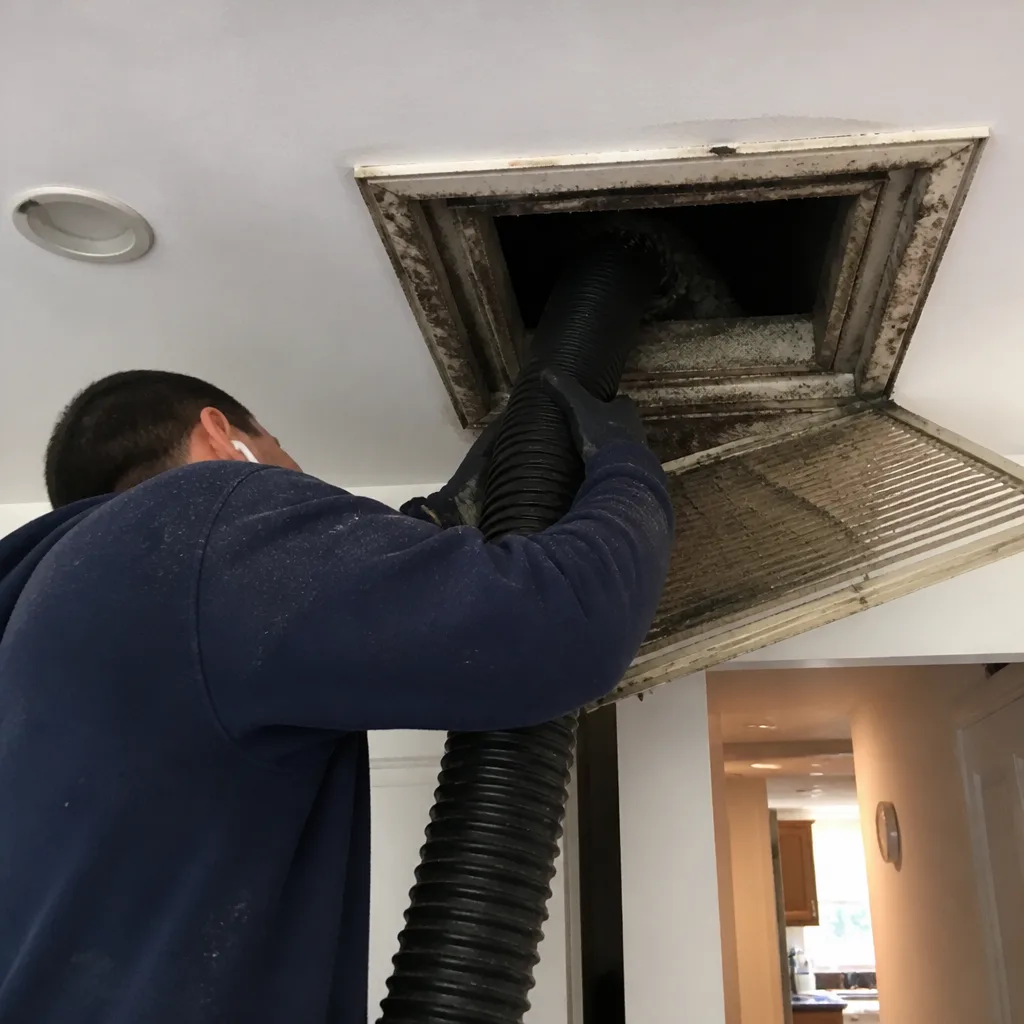 Before
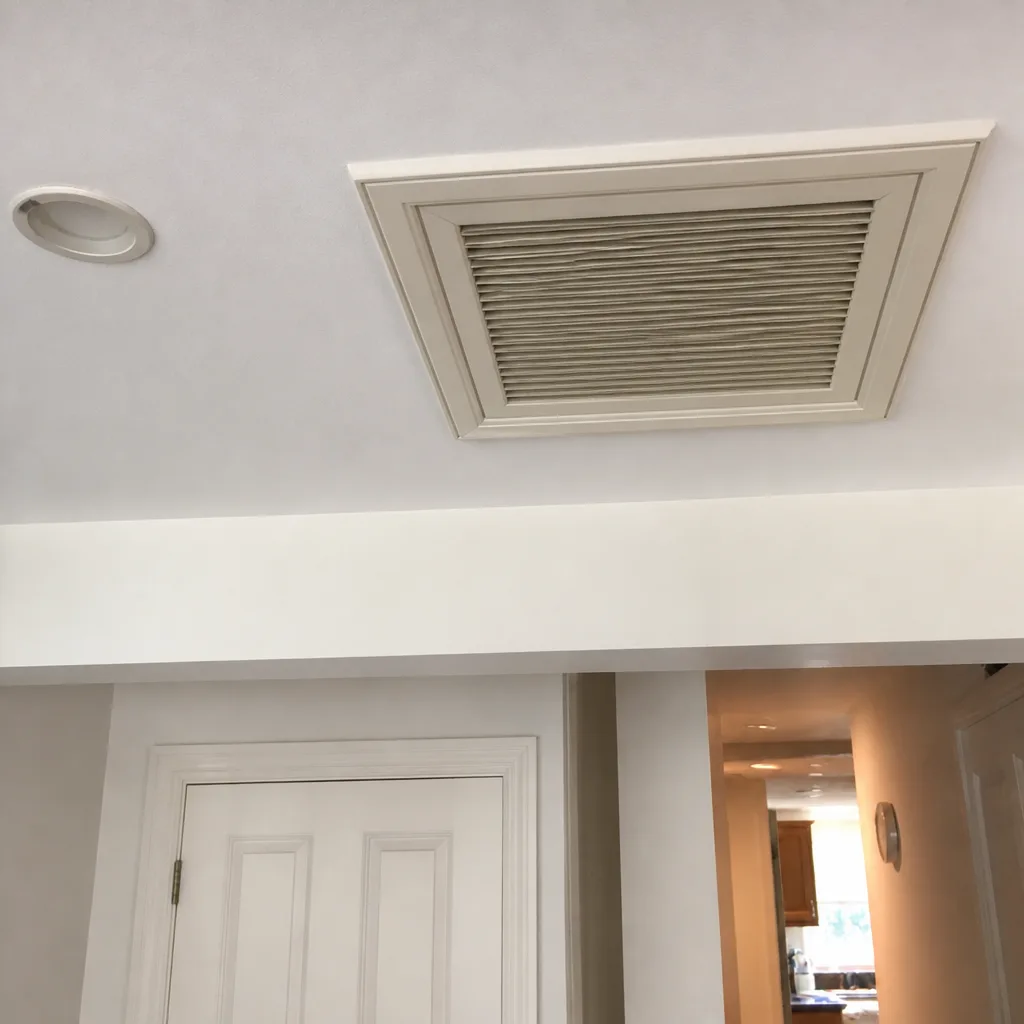 After
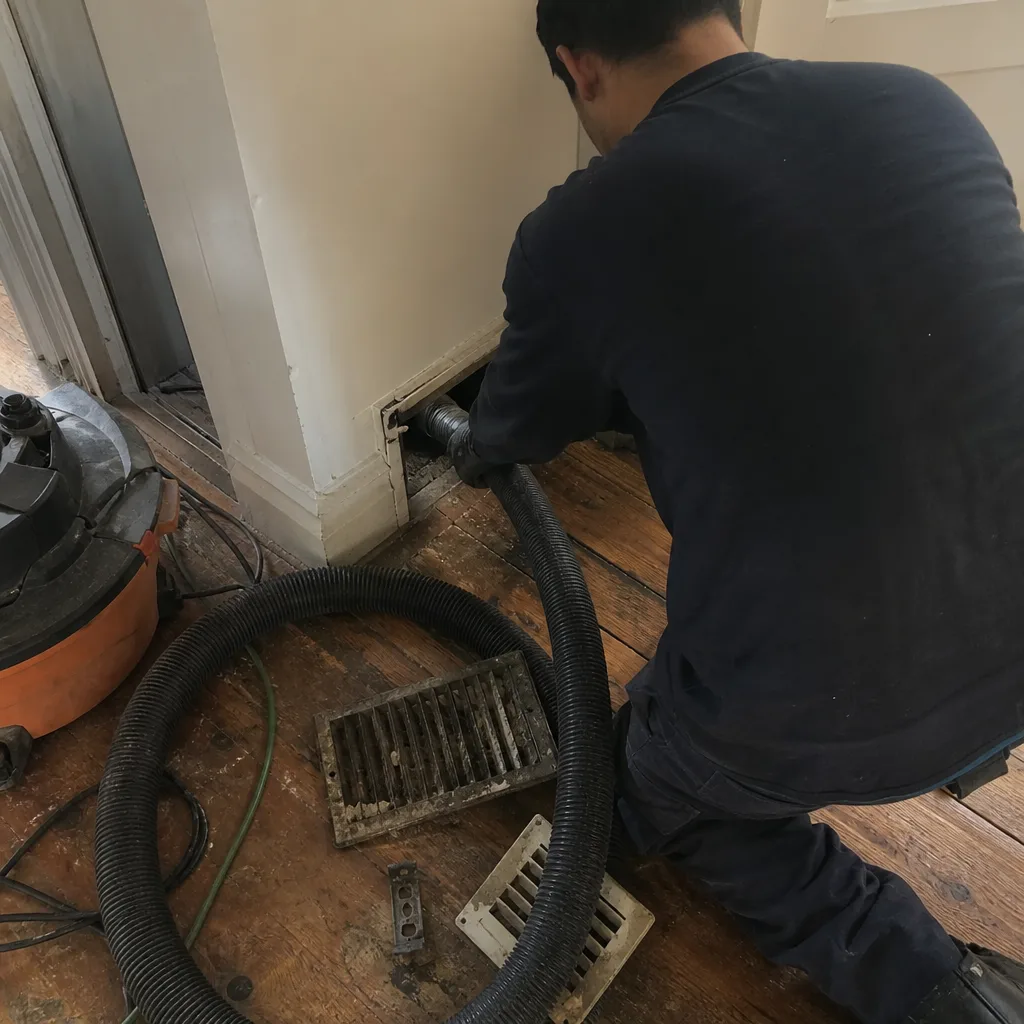 Before
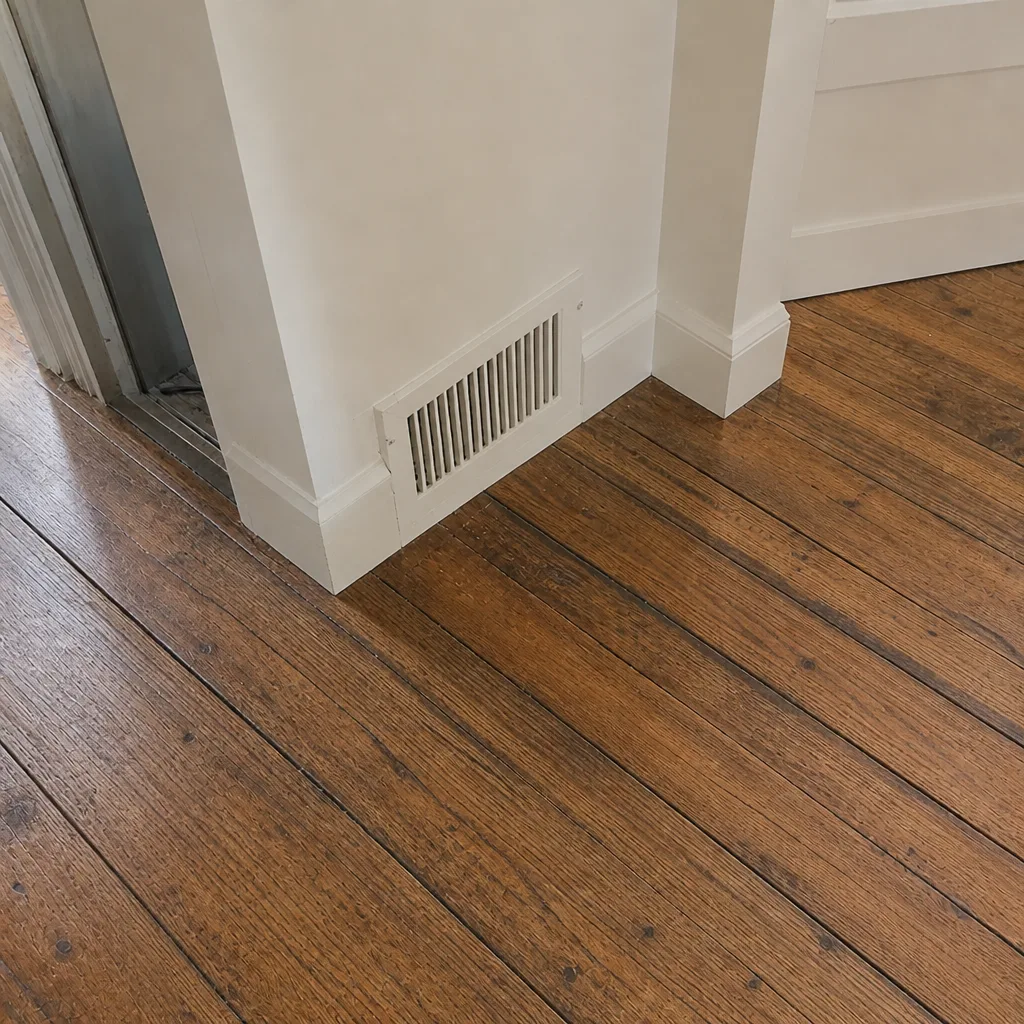 After
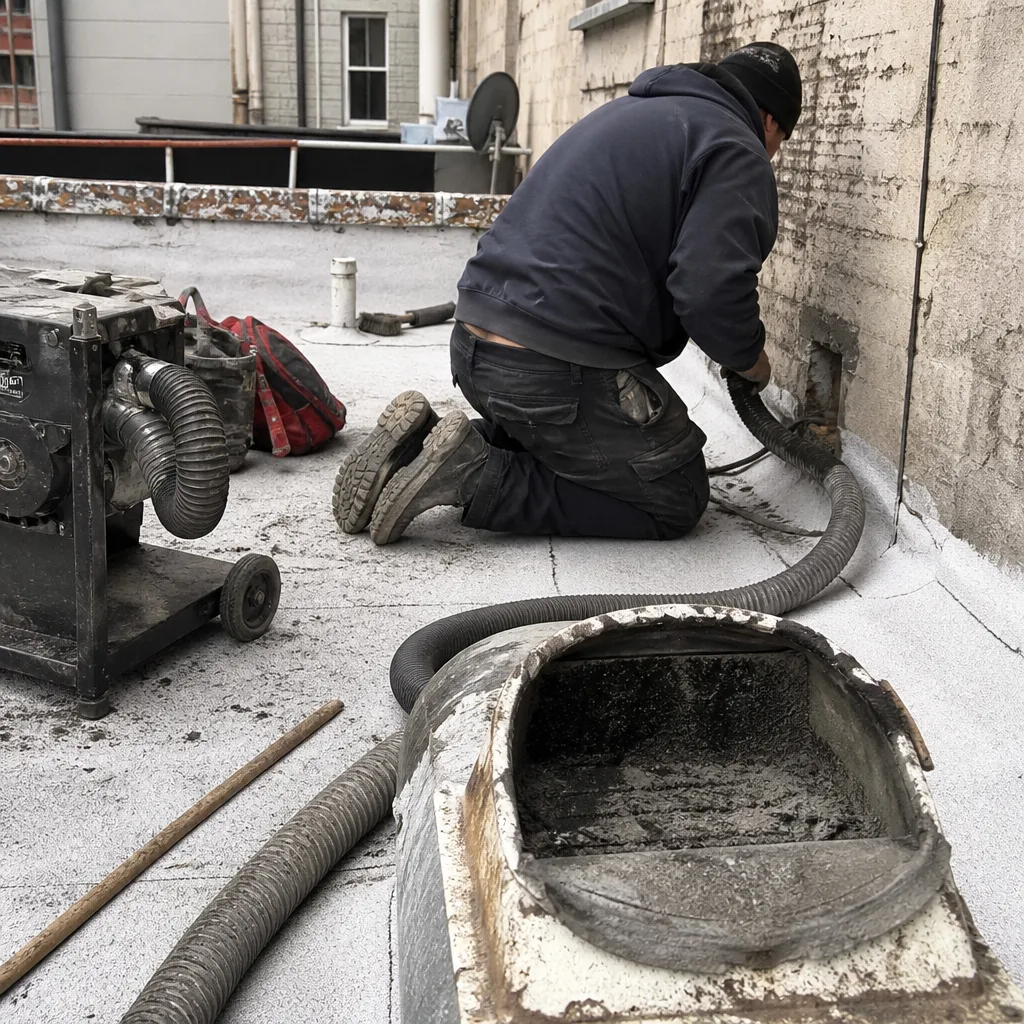 Before
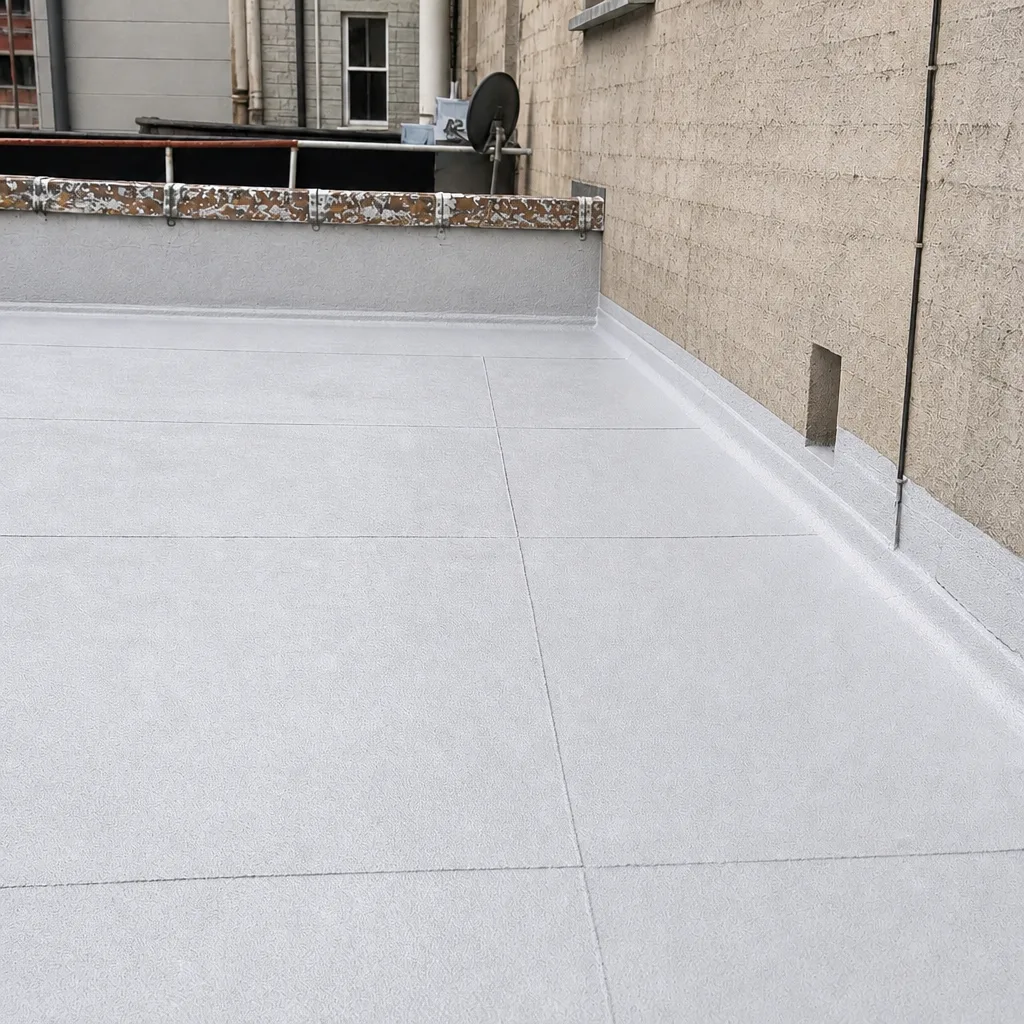 After
When to Call a Professional
Some jobs are maintenance and some are urgent. Call immediately if you smell mold or a persistent musty odor coming from your vents, if you notice visible dust plumes or streaks at the register, if you’ve recently had water damage or a renovation, if a humidifier or dehumidifier is running but the home still feels damp, or if the dryer is taking noticeably longer to dry clothes than it used to. If anyone in the home has ongoing respiratory symptoms that ease when they’re away from the apartment, that’s worth investigating too.
For routine duct cleaning, most homes do well with a cleaning when the system shows signs of buildup – visible dust, poor airflow, or a recent renovation. The honest answer is that there’s no universal schedule; the condition of the system and the building determines it. Our technicians have up to 11 years of experience reading that condition and can tell you what your system actually needs. Air Duct Cleaning Lower East Side offers free estimates in Lower East Side – call (866) 369-3604. We answer 24/7. Fast dispatch from 7am to 7pm, Sunday through Friday.
Frequently Asked Questions
Typical whole-system air duct cleaning in Lower East Side runs in the range of $350 to $650 for a standard apartment, with larger systems or added HVAC cleaning and sealing work running higher. The exact number depends on the number of vents, the system layout, whether the air handler and coil are included, and whether repair or sealing work is needed. Be wary of any quote far below that range – it usually signals a low-CFM unit and an add-on list. Call (866) 369-3604 for an exact quote – estimates are free.
Cheap quotes are usually built on two things: lower-CFM equipment and a business model that relies on add-ons after the technician is inside your unit. A $99 teaser price doesn’t cover a real whole-system cleaning with HEPA vacuum capture and rotary contact cleaning – so the contractor gets their margin by pressuring you on sanitizing, deodorizing, or “extra deep” cleaning once they’re already on site. One flat price per system, agreed before work starts, avoids the whole dynamic. Call (866) 369-3604 for a written flat-price estimate.
Ask for dated before-and-after photos of your own ducts, not stock images. A contractor who does real work has no problem photographing it – and a contractor who resists that request has told you something useful. Pair the photos with a written scope that names the vents you were paying for, and require the photos in the estimate. If a company won’t document the job, don’t hire them. Call (866) 369-3604 to schedule an estimate and see our documentation process.
There’s no universal schedule – it depends on the system, the building, and the household. In Lower East Side apartments, shared returns and older construction often mean buildup is faster than in suburban homes, and recent renovations or water events can justify an earlier cleaning. A simple approach is to have an honest inspection when you notice symptoms: visible dust, poor airflow, or a persistent odor. Then clean when the inspection shows buildup, not on a calendar. Call (866) 369-3604 to talk through your situation.
Yes – plan to be present for the estimate and available while the crew works, especially for access to closets, utility rooms, and the register locations they’ll be working around. In a co-op or condo, you may also need to let the crew into shared areas like a roof hatch or basement riser, depending on how your building’s system is configured. Ask when you book so you can arrange building access in advance. Call (866) 369-3604 to plan the visit.
Duct cleaning focuses on the duct runs (supply and return branches, boots, and registers). HVAC cleaning focuses on the equipment – the air handler, blower wheel, evaporator coil, and drain pan where biological growth and dust accumulate. Most real jobs need both, and some need sealing and sanitizing on top. Our HVAC cleaning service covers the equipment side so the whole air pathway is addressed in one visit. Call (866) 369-3604 for a combined estimate.
The Bottom Line
Hiring a duct cleaning contractor in Lower East Side comes down to four checks: verify licensing and insurance, ask about CFM and vacuum class, insist on before-and-after photos of your own ducts, and get the scope, equipment, and warranty in writing before anything starts. A professional operator will welcome those questions; a low-bid coupon outfit will dodge them. Use the diagnostic questions in this guide on your next quote call, and you’ll know within minutes which kind of contractor you’re dealing with. One flat price per system, agreed before work starts, with documentation in hand at the end – that’s the standard. Anything less isn’t a deal; it’s a future problem.
If your ducts are ready for a proper look, give us a call. We don’t just clean ducts – we close the gaps, treat the air, and hand back a system that works. From intake to vent, every part of your air pathway is something we can assess and address. We’ll walk you through our equipment, our process, and our written estimate before anything begins.
Air Duct Cleaning Lower East Side
Call (866) 369-3604 for a free estimate. We answer 24/7. Fast dispatch from 7am to 7pm, Sunday through Friday.
Written by the team at Air Duct Cleaning Lower East Side.