
Last updated November 22, 2026
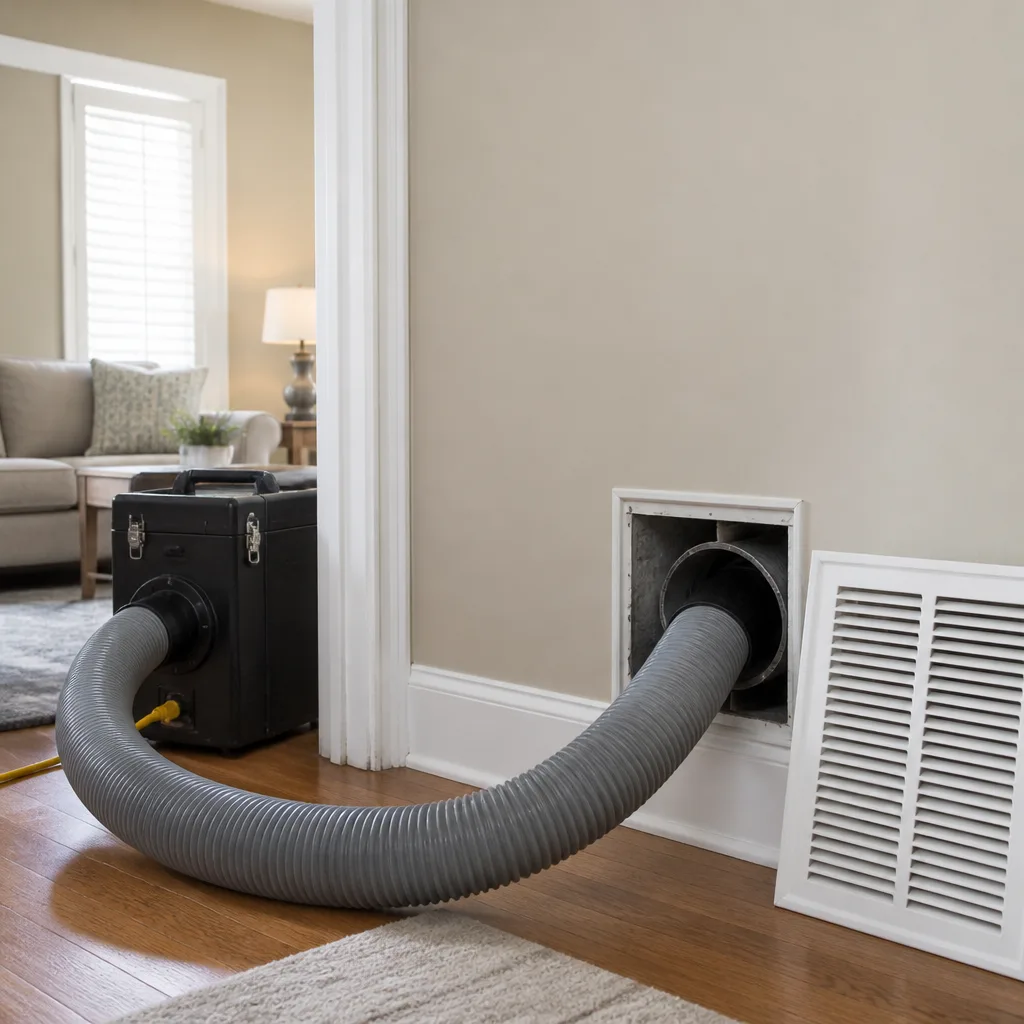 Whole-home duct cleaning
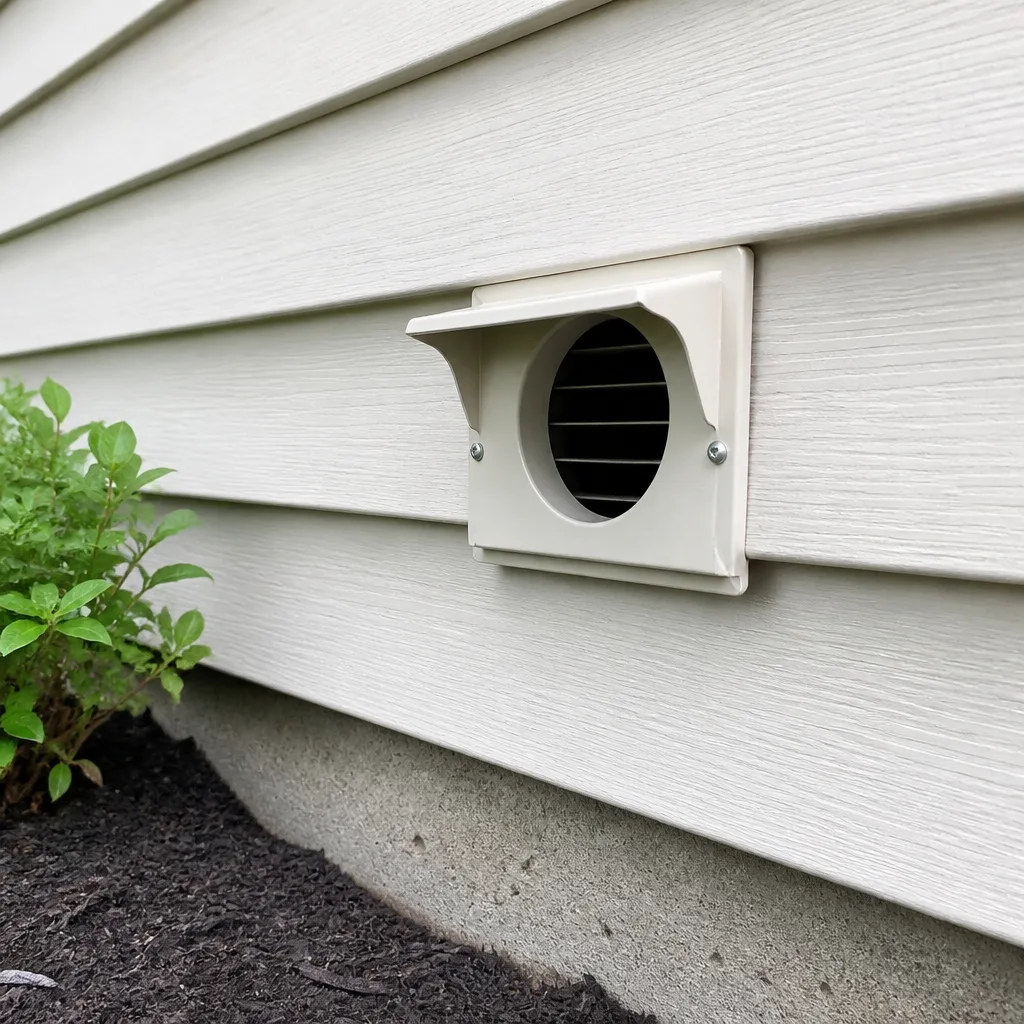 Dryer vent cleaning
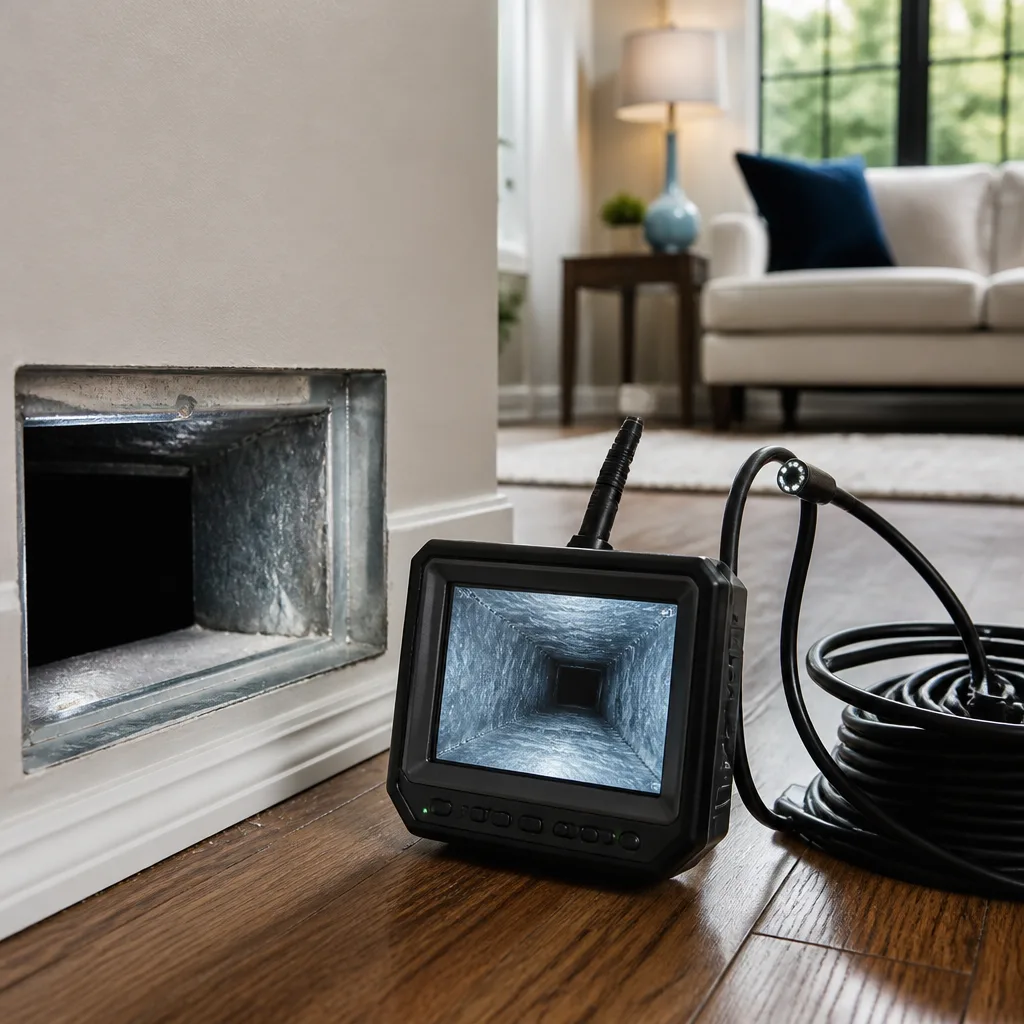 Camera inspection
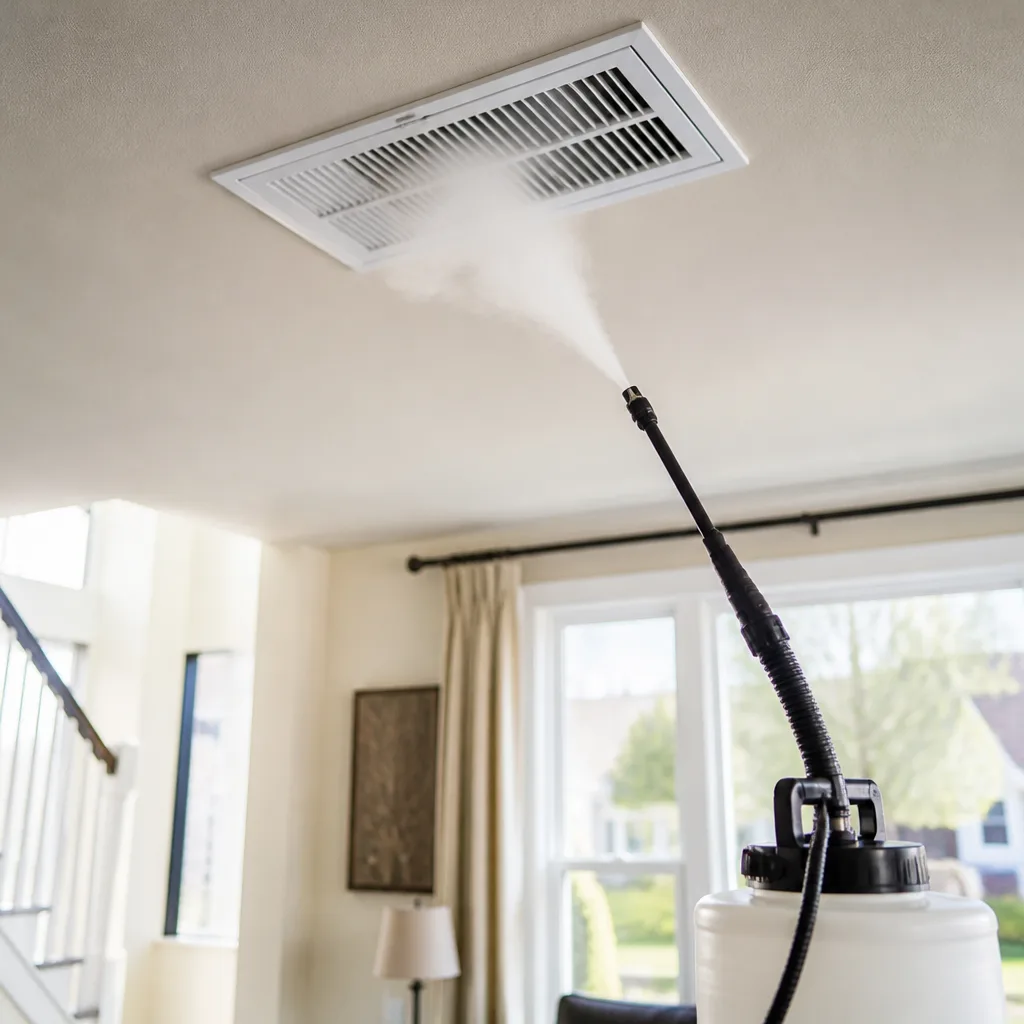 Sanitizing & deodorizing
Whole-system duct and dryer vent check with before-and-after photos - you see exactly what came out of your vents
That "$99 whole-house special" is a bait ad - the real number appears once they are in your hallway, or the "clean" is a shop-vac at the register. We photograph the inside of your ducts before and after instead.
Seasonal Air Duct Cleaning Care for Lower East Side: Year-Round Homeowner’s Guide
Most people in the Lower East Side clean their ducts on the same schedule they use for changing smoke detector batteries: once a year, whenever they get around to it. That calendar has nothing to do with how dirt actually accumulates inside a forced-air system. Contaminants build in waves that follow the building’s own cycles – a humid summer that nothing is running, a heating season that starts with a jolt in October, a spring construction season that sends fine dust through every open corridor and courtyard. This guide maps those cycles to specific duct care actions so you know what to check and when. You’ll learn what each Lower East Side season deposits in your system, what to do about it, and how to build a two-year professional cycle that actually matches the way your building breathes.
Quick Answer
Seasonal air duct cleaning in the Lower East Side follows the building’s cycles, not the calendar: inspect and clean after heating season (spring), address moisture and mold risk before humid summer air sits in inactive ductwork, clean and inspect the blower before the first cold snap (fall), and do filter and register checks mid-winter when the system runs at full load. Most Lower East Side apartments do well on a professional cleaning every two years with seasonal monitoring in between, rather than a single arbitrary annual appointment.
Styles & brands we work with
- Whole-home duct cleaning
- Dryer vent cleaning
- Camera inspection
- Sanitizing & deodorizing
Table of Contents
- Why seasonal timing matters more than an annual date
- Spring: post-winter inspection priorities
- Summer: the mold-risk window in inactive systems
- Fall: clean and inspect before the first cold snap
- Winter: mid-season checks at maximum load
- Building a two-year professional service cycle
- What a seasonal inspection actually covers
- Common mistakes to avoid
Why seasonal timing matters more than an annual date
Air duct contamination in the Lower East Side isn’t a steady drip. It arrives in bursts tied to how the building runs. When heat is on from October through April, the system pulls in whatever is airborne and pushes it through the same ducts hour after hour. When heat is off and only a fan or nothing at all is moving air, dust settles and stays put. Add summer humidity and you get an environment where settled organic material can support microbial growth on duct surfaces that stay damp.
That pattern is the core reason a single annual cleaning date misses the point. If you clean in August, you’ve removed what winter and spring left behind but done nothing to prepare for the next heating season. If you clean in January, you disrupt the system mid-load and leave the settled summer deposits in place. The right question isn’t “how often,” it’s “when in the cycle.”
Lower East Side housing adds its own variables to this. Walk-ups and tenements converted to forced air have duct runs that were often retrofitted into spaces never designed for them – short runs behind kitchen walls, risers shared between units, registers placed where a radiator once stood. These systems don’t behave like a suburban ranch house’s ductwork, and their seasonal contamination patterns differ too. A building running window units most of the summer and heat in winter has months where the duct interior sits completely still, humid, and undisturbed. That’s the incubation window.
So think of seasonal duct care as monitoring, not maintenance. You’re watching what the building deposits in each phase and responding to it, with a professional cleaning on a longer cycle that follows what the monitoring tells you. For a full baseline on how professional cleaning works from start to finish, see our air duct cleaning Lower East Side overview.
Spring: post-winter inspection priorities
Spring is when you assess the damage winter did. Six months of heating-season operation has pushed a full load of airborne dust, lint, and combustion-adjacent fine particulate through the system, and much of it bonded to duct walls rather than floating freely. A spring inspection should focus on three things: heating-season residue, moisture left over from the winter’s dry-air conditions, and whatever the neighborhood’s construction activity has added.
Heating-season residue. The blower and the return-side ductwork take the brunt. Return ducts pull air back from every room, including kitchens and hallways, so they accumulate material fastest. On the supply side, registers and the first few feet of each run collect what the blower couldn’t push through.
Moisture and dehumidification gaps. Many Lower East Side apartments rely on the heating system’s dry winter air to keep things from feeling damp, then close windows and stop ventilating entirely once spring arrives. Duct interiors that saw condensation on cold metal during winter can hold residual moisture into spring. That’s the window to check for it, before humid summer air makes it worse.
Construction dust. Spring is when renovation projects across the neighborhood restart in earnest, and fine gypsum and masonry dust travels through open windows, corridors, and shared stairwells. It gets pulled into return registers and settles inside ductwork. If there’s been active construction on your block or in your building, spring is the moment to check the returns.
Spring inspection checklist:
- Look at return registers and grilles for visible dust matting or dark staining.
- Check supply registers for uniform airflow – uneven flow signals a blockage or a leak.
- Smell the air at the registers when the fan first runs; a musty or stale note points to moisture.
- Note any recent construction near your intakes and whether filters show fresh dust loading.
- Check the filter – if it darkened unusually fast over winter, the returns are carrying more than normal.
Summer: the mold-risk window in inactive systems
Summer is the season most Lower East Side residents ignore their ducts, and it’s precisely the season when they should be paying attention. When the heating system is off and the fan is idle, duct interiors become still, shaded, humid chambers. Warm air holds more moisture, and any settled organic material – skin cells, pet dander, food particulate, lint – provides the substrate for microbial growth on damp surfaces. Four months of that is a long time.
This is why the worst time to discover mold coating your ductwork is the first cold morning in October when you turn the heat on. Summer humidity had four months to work inside ductwork nothing was running. When the blower finally fires, it pushes everything that grew across the whole apartment in one cycle.
The practical response is to act before August ends. What you can do yourself:
- Run the fan periodically even without heat. Moving air keeps duct interiors drier and prevents long stagnant humid periods.
- Keep interior humidity in check with a dehumidifier in the rooms where registers sit, especially basement-level or courtyard-facing apartments.
- Change filters more often in humid months, since damp filter media supports growth too.
- Watch for musty odors near registers on humid days – that’s the earliest and clearest signal.
What needs professional attention is the inside of the ductwork itself. A seasonal cleaning that runs prior to summer’s peak – or an assessment before fall – lets you catch microbial growth on the interior walls before heating season distributes it. Our technicians use Rotobrush rotary contact cleaning to dislodge contaminants bonded to duct walls, and Nikro HEPA-rated vacuums to capture them at the source rather than redistributing them into your apartment. When growth is present, sanitizing with Guardsman-grade solutions addresses what cleaning alone leaves on the surface. That’s part of the reason we treat air quality and sanitizing as a core service rather than an add-on.
Fall: clean and inspect before the first cold snap
Fall is the single most important appointment on the seasonal calendar, because it’s your last chance to prepare the system before it runs continuously for six months. The goal is a clean system entering heating season: no accumulated summer residue to blow around, a clear blower, sealed connections so you’re not pulling attic or courtyard air into the living space, and a filter that starts the season fresh.
There’s a specific Lower East Side situation worth calling out: buildings converting from steam or radiator heat to forced air. That conversion changes everything about where contaminants go and how fast. Old radiator systems deposited dust on surfaces you could see and wipe. A forced-air system pulls the same material into ductwork you can’t see, and the first heating season in a converted building can concentrate years of accumulated building dust inside the new duct runs. If your building has recently converted, a pre-heating-season cleaning and blower inspection isn’t optional – it’s the baseline for the new system.
What a fall appointment should include:
- Full cleaning of supply and return ductwork, before the system runs continuously.
- Blower and air-handler inspection for accumulated dust and debris on the wheel and housing.
- Sealing gaps and leaks at joints and connections – a leaky duct draws unfiltered air in from wherever it runs.
- Filter replacement and confirmation that the filter you’re using matches the system’s airflow needs.
- Register check across every room, confirming even distribution before you depend on it all winter.
Duct Repair & Sealing belongs in this appointment, not in a separate call after the fact. Gaps and loose joints are where energy loss and unfiltered air enter the system, and a cleaning that leaves them unaddressed sends you looking for another contractor. We do both in-house, so the system that goes into heating season is clean and sealed rather than just clean. Our air duct cleaning work is built to cover that full scope, and our HVAC cleaning covers the mechanical side of the same pathway.
Winter: mid-season checks at maximum load
Winter is when the system runs hardest, and mid-season checks catch problems when they’re still small. You’re not cleaning ducts in January – you’re monitoring what maximum load does to the system and catching failures before they cost you a cold week.
The two items worth checking mid-winter:
Filters. A filter that was fresh in October can be loaded by late December under continuous operation. Check it every four to six weeks through the heating season, and more often in apartments with pets or near active construction. A clogged filter strains the blower, cuts airflow, and pushes more dust into the ducts because it can’t capture it.
Registers. In winter, uneven heating – one room warm, the next cold – usually points to a distribution problem rather than a furnace problem. Check each register for airflow by hand. If a room’s supply is weak while others are strong, suspect a partially closed damper, a disconnected run, or a leak in the duct serving that room. Build a simple habit of checking every register once mid-winter and once in early spring.
Also worth noting: dryer vent behavior changes in winter too. Heavy winter loads and lint accumulation get more attention in cold months, and a clogged dryer vent is a fire risk year-round but especially when the appliance runs more often. Our dryer vent cleaning covers that separate but related pathway in the same air system.
If anything in winter points to a problem – persistent musty odor, sudden dust at registers, a blower that sounds strained – get an assessment rather than waiting for spring. Call (866) 369-3604. We answer 24/7. Fast dispatch from 7am to 7pm, Sunday through Friday. The estimate is free, and the written estimate sets the price.
Building a two-year professional service cycle
The default “clean once a year” advice ignores how much a professional cleaning actually removes and how fast it accumulates again in different environments. For most Lower East Side apartments, a two-year professional cycle works better, with seasonal monitoring in between telling you whether that cycle needs to tighten. Here’s how to build one.
Year 1.
- Spring: post-winter inspection using the checklist above. Clean if returns show heavy loading or if there’s been substantial construction near your intakes.
- Summer: moisture watch. Address any musty odor before August ends with a sanitizing assessment.
- Fall: full professional cleaning, blower inspection, duct sealing, and fresh filters.
- Winter: mid-season filter and register checks.
Year 2.
- Spring: inspection. If the system runs clean and registers show even airflow, you’ve confirmed a two-year cycle works for your apartment.
- Summer: same moisture watch.
- Fall: professional cleaning if spring inspection flagged loading, or another two-year stretch if it didn’t. Adjust based on what you’ve learned about your building’s accumulation rate.
- Winter: same mid-season checks.
Some Lower East Side situations compress that cycle. If you’re near an active construction site, if your building converted from steam to forced air recently, if there are pets or smokers in the unit, or if you’ve had a moisture or mold event, plan on annual cleaning with tighter seasonal monitoring. A building that runs clean and stays dry can stretch past two years with a good inspection in between.
The point of the framework is that you now have data instead of a guess. Each spring inspection tells you whether the last cleaning held, and that answer is what should drive the next appointment. Most homeowners have never seen their ducts before, and the honest way to get a baseline is to have someone who can show you – not just tell you – what’s inside. That’s why we take before-and-after photos of your own ducts as part of every job: you see what accumulated and what came out. You don’t have to trust a claim; you can look at the evidence.
What a seasonal inspection actually covers
A seasonal visit isn’t the same as a full cleaning. It’s a shorter assessment that tells you whether cleaning is needed and where the system is struggling. Here’s what a seasonal inspection should cover when done properly, and what separates a professional assessment from a quick glance at a register.
- Full air pathway, not just supply ducts. Returns, supply runs, the air handler, and the blower. Contaminants live in all of them.
- Visible condition of duct interiors. Professional equipment with cameras and lights lets a technician see what a flashlight can’t.
- Joint and seal condition. Loose joints, disconnected runs, and torn connections are common in retrofitted Lower East Side ductwork.
- Filter condition and match. The wrong filter – too restrictive for airflow, or too cheap to capture what your system pulls – undermines everything else.
- Moisture and odor assessment. Signal of microbial growth, condensation problems, or a leak from outside the system.
- Blower wheel condition. A dusty blower wheel loses efficiency and moves less air; it’s often the single fastest efficiency gain.
We use professional-grade equipment for this, not consumer tools. Rotobrush rotary contact cleaning dislodges contaminants bonded to duct walls. Nikro HEPA vacuum units capture particulate at the source rather than redistributing it. Abatement Technologies air-scrubbers run negative pressure during sanitizing work, the same class of equipment used in remediation projects. Our technicians have up to 11 years of experience, and they work with Honeywell and Aprilaire system components regularly – so if you have premium home HVAC equipment, the assessment and cleaning integrate with what you have rather than fighting it.
For a full rundown of our service categories, visit our Air Duct Cleaning Lower East Side page.
Common mistakes to avoid
- Assuming a single annual cleaning is enough. Cleaning on an arbitrary date ignores when contaminants accumulate. Following the building’s seasonal cycle tells you when to clean and when to wait.
- Cleaning in summer and calling it done for the year. A summer cleaning leaves you entering heating season with four months of settled residue. If you can afford one cleaning, put it in fall.
- Skipping the blower. Cleaning ducts while leaving a dusty blower wheel in place means the wheel keeps recirculating dust into the freshly cleaned ducts. Inspect it every time.
- Ignoring a musty smell in humid months. Musty odor near registers in summer is the clearest early signal of mold growth in an inactive system. Waiting for October means spreading it across every room in the first heating cycle.
- Cleaning without sealing. A cleaning that leaves gaps and loose joints in place loses efficiency and pulls unfiltered air in from outside the system. Repair and sealing belong in the same visit.
- Using the wrong filter. A too-restrictive filter starves the system for airflow; a too-thin one captures almost nothing. Match the filter to what your air handler is rated for.
- Treating the dryer vent as unrelated. The dryer vent is part of your home’s air system too, and lint accumulates year-round. Ignoring it in seasonal checks leaves a fire risk unaddressed.
See the difference
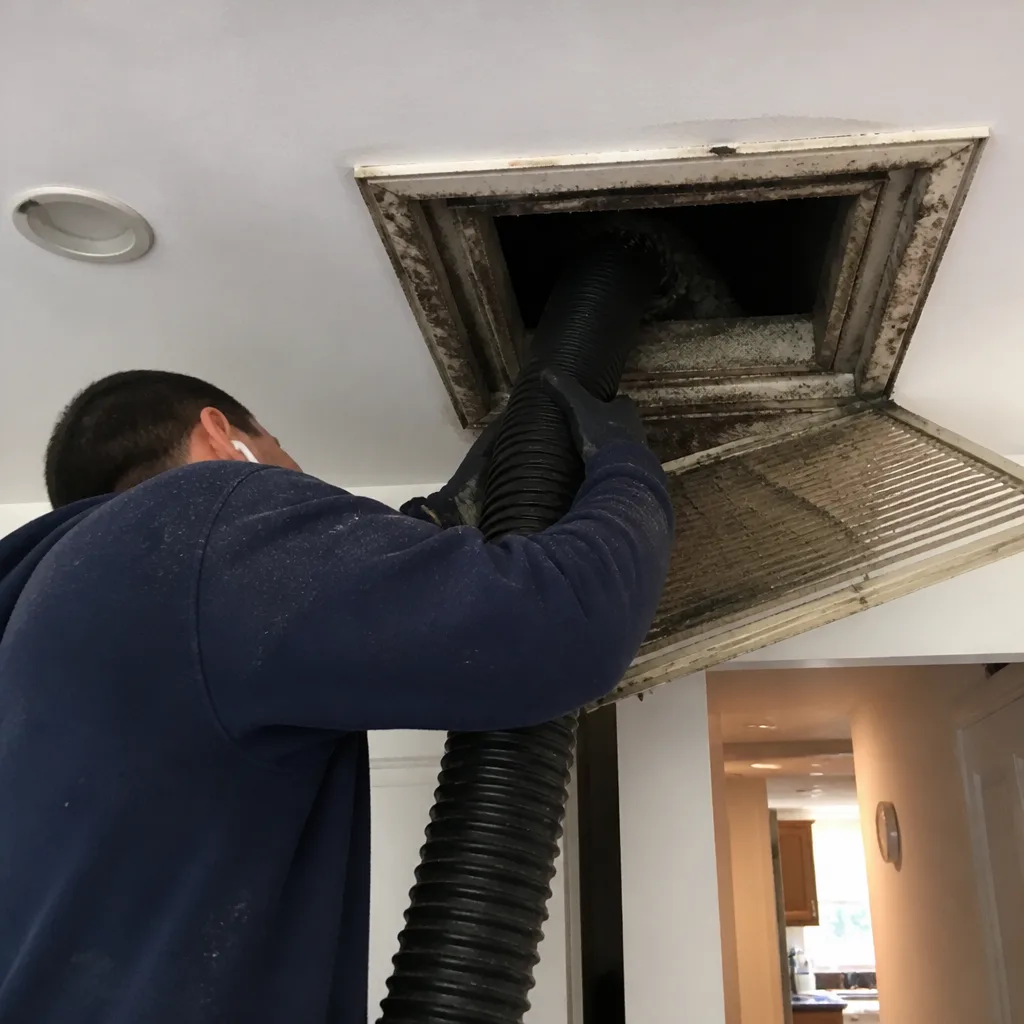 Before
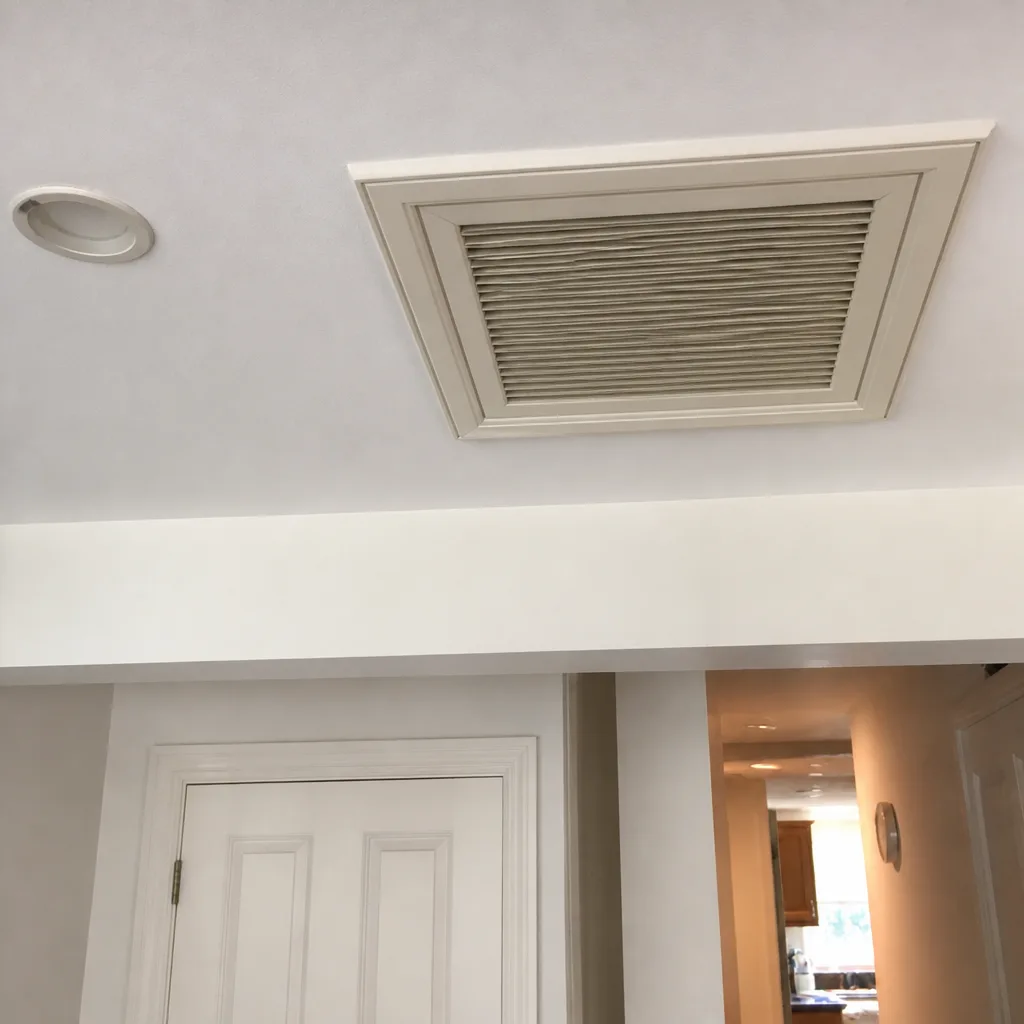 After
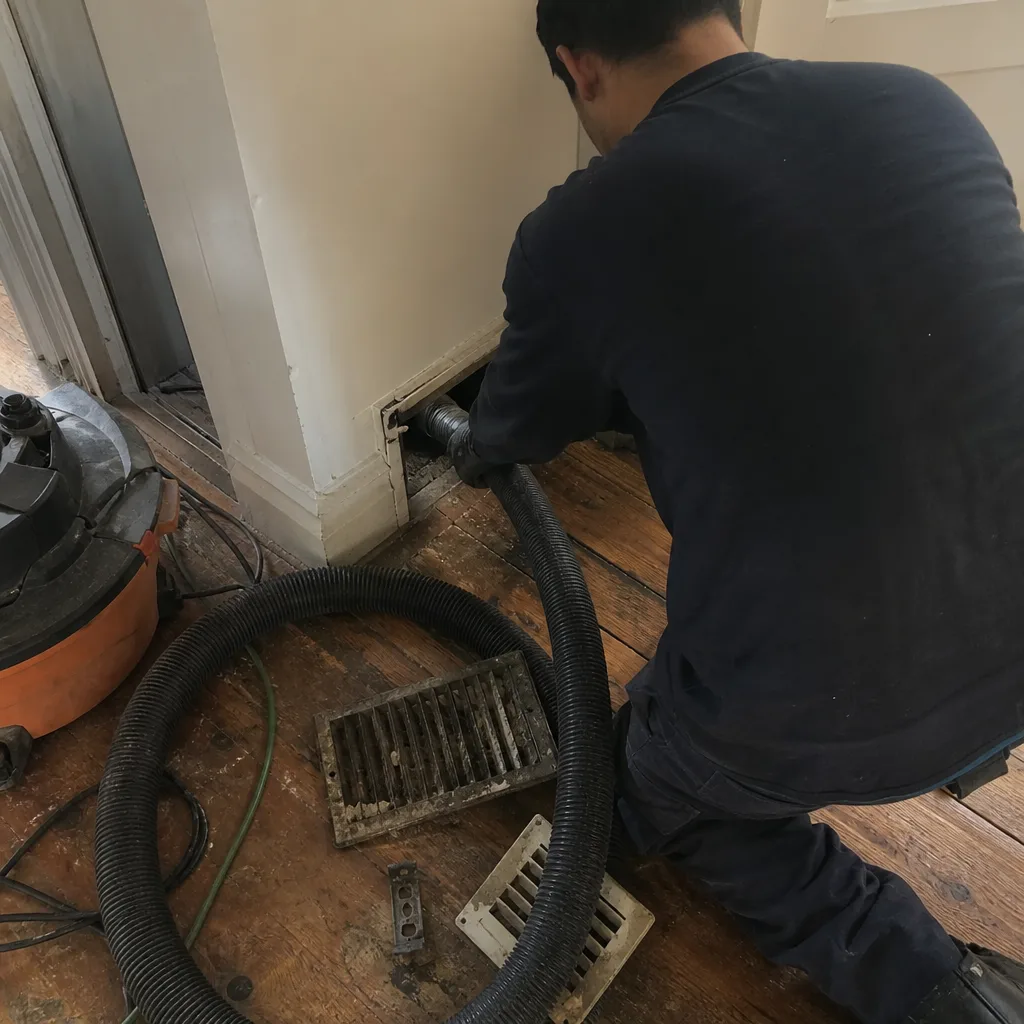 Before
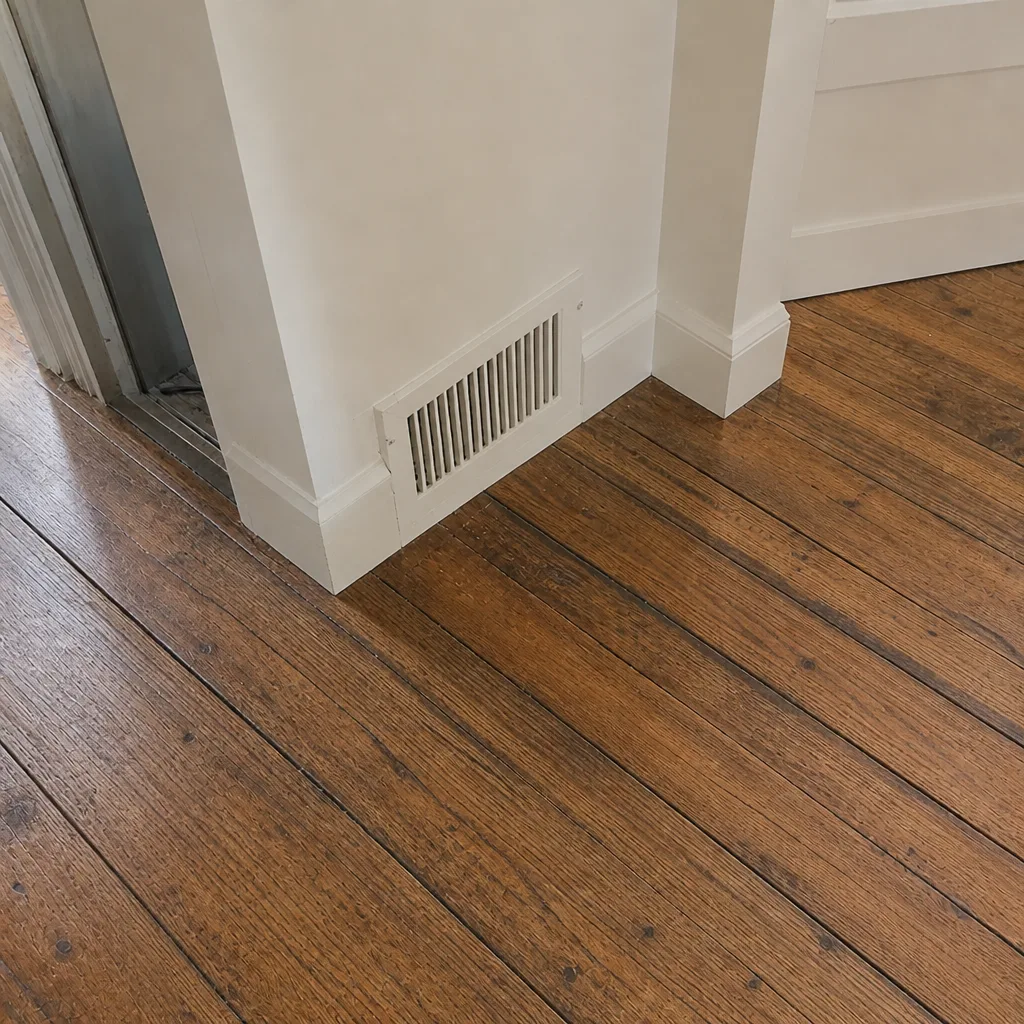 After
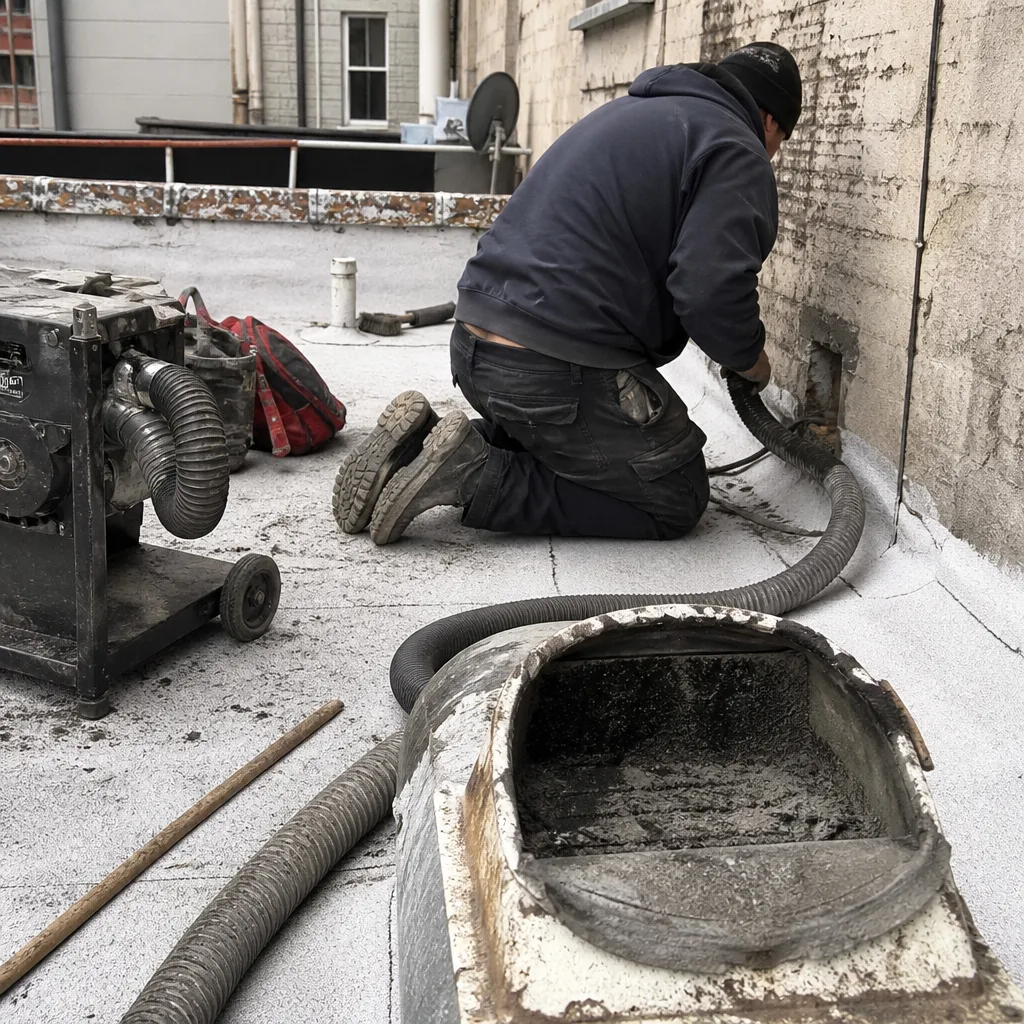 Before
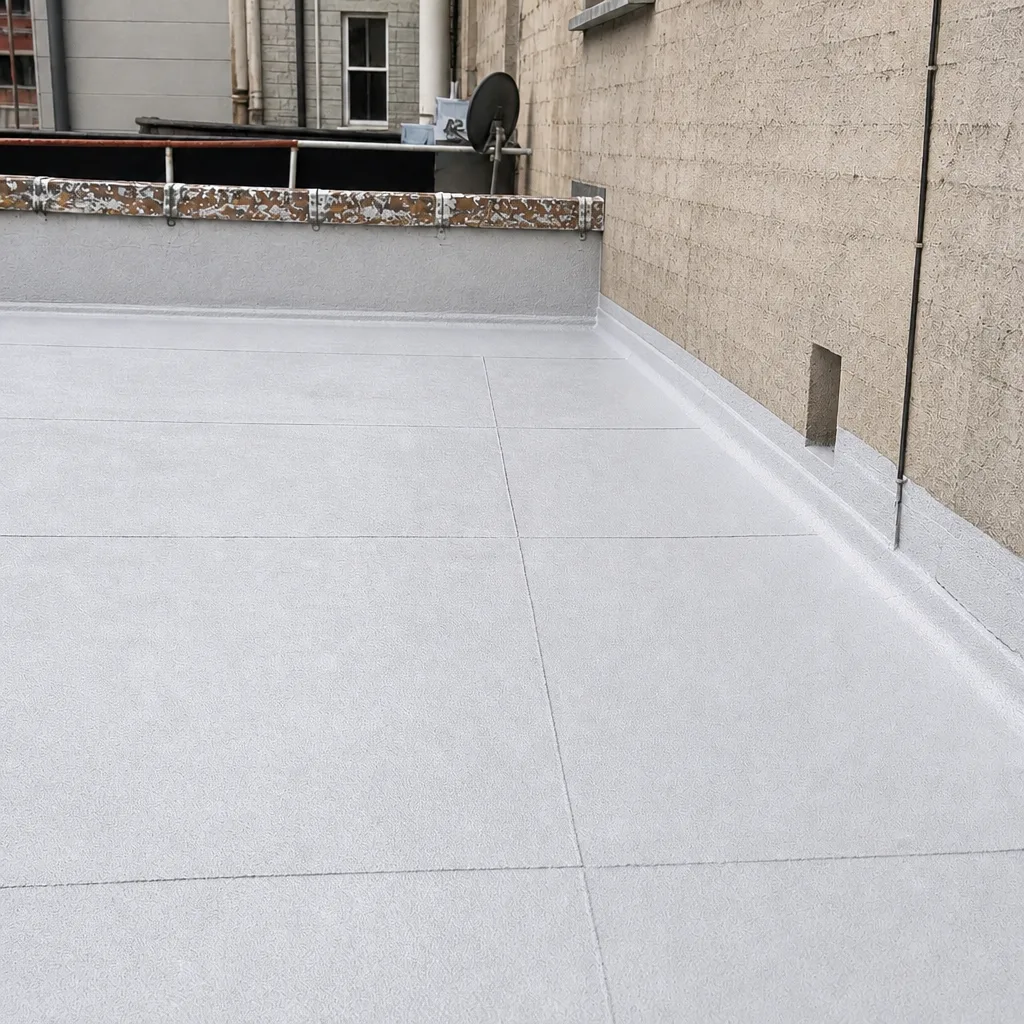 After
When to Call a Professional
You don’t need a professional for a seasonal register check or a filter change – those are things any homeowner can handle. You do need one when the signals point to something you can’t see. Call for help if you notice a persistent musty or stale odor at registers regardless of season, if winter dust is suddenly heavier than in past years, if you see dark staining at return grilles or the floor beneath them, if a recent steam-to-forced-air conversion means the system has never been cleaned, if there’s been substantial construction dust near your intakes, or if uneven heating suggests a disconnected or leaking run you can’t identify. Air Duct Cleaning Lower East Side offers free estimates in Lower East Side – call (866) 369-3604. We answer 24/7. Fast dispatch from 7am to 7pm, Sunday through Friday.
Frequently Asked Questions
Most Lower East Side apartments do well on a professional cleaning every two years with seasonal monitoring in between, but that baseline compresses to annual cleaning if you’re near active construction, have pets or smokers in the unit, converted from steam to forced air recently, or had a moisture or mold event. The right interval comes from a spring inspection that tells you how much accumulated in the last cycle instead of from a general recommendation.
Summer is the most damaging season to skip because inactive, humid ductwork is where microbial growth develops and goes unnoticed until heating season begins. Fall is the most important season to act, because a cleaning before the first cold snap determines what the system distributes for the next six months. Skipping both leaves you entering winter with a system that has a full summer’s accumulation inside it. Call (866) 369-3604 for an exact quote – estimates are free.
A musty smell on the first cold day is usually a sign of microbial growth that developed in the ductwork over the humid summer, plus settled dust from months of inactivity. When the blower fires up, it pushes all of that into the living space at once. A professional cleaning and sanitizing before heating season addresses the source rather than just the smell. Guardsman-grade sanitizing solutions treat duct surfaces after mechanical cleaning, so what’s left behind is clean surface, not treated contamination.
Yes. Buildings that have recently converted from steam or radiator heat to forced air should have a professional cleaning before their first full heating season, then return to the standard two-year monitoring cycle. The conversion pulls years of accumulated building dust into ductwork that wasn’t there before, and the first heating season in a converted building deposits more material than any subsequent one will.
You should see before-and-after photos of your own ducts, not a generic marketing image. Any professional that treats cleaning as a technical service should be willing to show you the interior condition before work starts and the result when it’s finished. That’s part of why we take photos on every job – it removes the guesswork. If someone won’t show you, that’s a reason to look elsewhere.
The cheapest quotes usually skip the blower, skip sealing, and use consumer-grade vacuums that redistribute rather than capture contaminants. A full seasonal cleaning should cover supply and return ducts, the air handler, the blower wheel, seal and joint inspection, and professional equipment with HEPA-rated vacuum capture. We price one flat figure per job, agreed in the written estimate before work starts, with no per-vent pricing. Call (866) 369-3604 for an exact quote – estimates are free.
The Bottom Line
Seasonal duct care in the Lower East Side isn’t about picking a date on the calendar – it’s about matching the work to the building’s own cycles. Spring is for inspection and cleanup after winter. Summer is the moisture watch, when inactive humid ductwork is at its most vulnerable. Fall is the appointment that matters most, putting a clean, sealed system into heating season before the first cold snap. Winter is for filters and registers under maximum load. Build a two-year professional cycle around those checkpoints, adjust the interval based on what each spring inspection shows, and you’ll stop guessing about your air quality and start responding to evidence. The full air system – cleaned, sealed, and sanitized.
If you’re ready to put a seasonal plan in place for your own home, we’re here to help. Call (866) 369-3604 for a free estimate. We answer 24/7. Fast dispatch from 7am to 7pm, Sunday through Friday. One flat price per system, agreed in the written estimate before work starts, with before-and-after photos of your own ducts.
Written by the team at Air Duct Cleaning Lower East Side.